What Shoe Raw Materials Can a Shoe Material Cutting Machine Process? Leather, EVA, Foam & Fabric
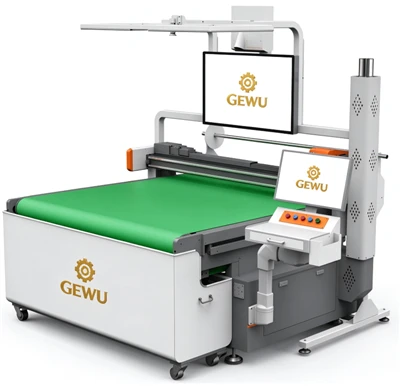
A shoe material cutting machine is not a single-purpose tool. The same CNC oscillating knife system that cuts delicate leather uppers can also slice through thick EVA midsoles, compressible foam inserts, and synthetic fabrics-often in the same production shift. This versatility comes from the interchangeable tool head design and the fundamental mechanics of the oscillating knife, which cuts by high-frequency vibration rather than heat or hydraulic force.
Why Oscillating Knife Technology Handles Diverse Materials
The core mechanism is straightforward. A hardened blade vibrates vertically at frequencies between 3,500 and 15,000 strokes per minute while rotating 360 degrees to follow the cutting path . Unlike laser cutting, which burns or melts the material, the oscillating knife separates it mechanically. Unlike hydraulic die cutting, it requires no physical mold for each pattern.
This mechanical cutting action minimizes material deformation. The rapid vibration reduces drag and strain on the material, allowing clean cuts through thick, dense, or flexible substrates that would tear or distort under slower cutting methods .
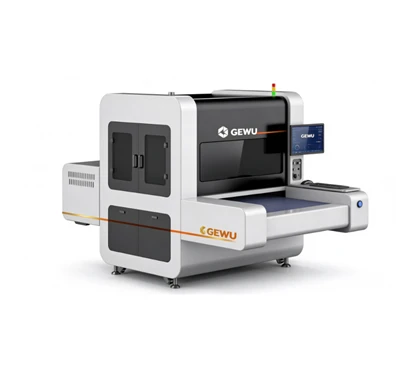
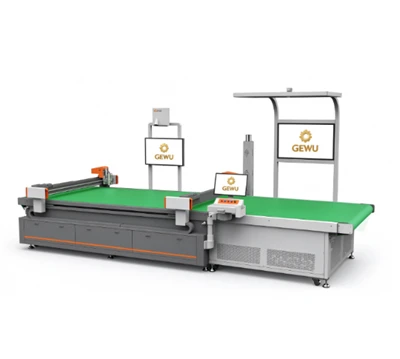
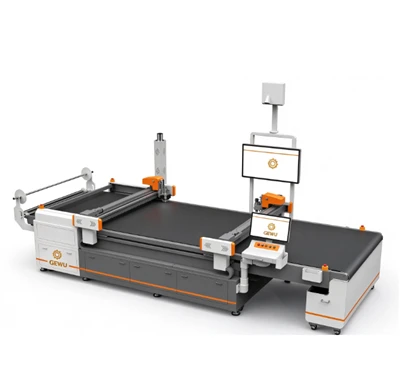
The tool head itself is interchangeable. A standard shoe material cutting machine can be equipped with a vibrating knife for general cutting, a circular knife for woven textiles, a pneumatic knife for thick soft materials, and punching tools for holes and eyelets . This tool-changing capability is what enables one machine to process the full range of footwear materials.
Leather and Synthetic Leather
Genuine leather, PU synthetic leather, and microfiber are among the most common materials processed by oscillating knife cutting machines . Leather cutting presents a unique challenge because no two hides are identical. Defects, scars, and variations in thickness and quality across a single hide mean that nesting patterns must adapt to the material's actual condition, not an idealized digital outline.
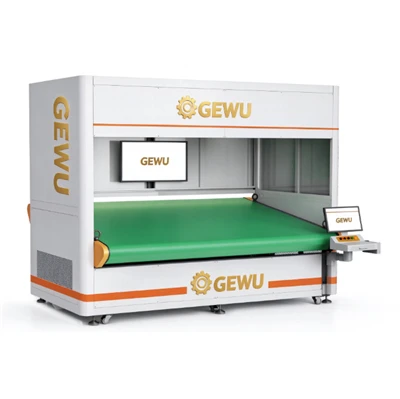
Modern CNC cutting machines address this with camera and projector systems that scan each hide, identify defects and dirty areas, and perform automatic nesting that avoids problematic regions . This capability improves material utilization-a critical factor when working with an expensive raw material.
The oscillating knife cuts leather cleanly without the edge sealing or discoloration that laser cutting produces. For shoe uppers, where cut edges may be visible in the finished product, this clean edge quality matters.
EVA Foam
EVA (ethylene vinyl acetate) is the dominant material for athletic shoe midsoles due to its lightweight cushioning and shock absorption . It presents different cutting challenges than leather: it is compressible, elastic, and varies in density depending on the foam grade.
Oscillating knife machines handle EVA foam effectively, including EVA in sheet form and EVA sponge materials . The blade cuts through the foam structure without crushing or deforming the cell walls, which preserves the cushioning properties of the material. Cutting thickness for sponge and foam materials can reach up to 35mm depending on the material density .
Laser cutting is sometimes used on EVA, but it produces sealed or melted edges that can affect the appearance and performance of the foam. The mechanical cut of an oscillating knife leaves the foam structure intact.
Other Foam Materials
Beyond EVA, shoe material cutting machines process a broader range of foams: EPE (expanded polyethylene), XPE (cross-linked polyethylene), PU foam, and XLPE . These materials appear in insoles, linings, reinforcement layers, and packaging inserts.
The cutting parameters-blade type, oscillation frequency, cutting speed-are adjusted based on foam density. Harder, denser foams require higher oscillation frequencies to cut cleanly; softer foams may be cut at lower frequencies with a sharper blade geometry.
Fabrics and Textiles
Shoe uppers increasingly incorporate mesh, knit, and woven textile components. These materials include nylon, polyester, cotton, and blended constructions . Cutting textiles with an oscillating knife requires a blade geometry that separates fibers rather than dragging them.
Circular knife tools are often used for woven and knit fabrics. The rotating blade cuts continuously along the edge, producing clean separation without fraying or pulling . For mesh and breathable fabrics where the open structure must remain intact, the mechanical cutting action avoids the heat damage that could close or distort the mesh openings.
Rubber and Sole Materials
Rubber outsoles and rubber-containing composite materials can be cut with oscillating knife systems, though the higher density of rubber requires appropriate blade selection and cutting parameters . Pneumatic oscillating heads are specifically designed for dense materials, using compressed air to drive the blade at high force and frequency .
For shoe soles that combine multiple materials-EVA midsole bonded to rubber outsole, for example-the cutting machine can process the assembly or the individual components depending on the production stage.
Composite and Specialty Materials
Shoe manufacturing increasingly uses composite materials: carbon fiber reinforcement, TPU films, gasket materials, and multilayer laminates. Oscillating knife machines handle these as well . The key advantage is the absence of heat, which prevents delamination or distortion of heat-sensitive layers in a composite stack.
Matching Tool Head to Material
The material range described above is not processed with a single tool. The practical versatility of a shoe material cutting machine comes from selecting the right tool for each material :
| Material Category | Recommended Tool Head | Notes |
|---|---|---|
| Leather, PU, synthetic | Oscillating knife | Clean edges, no heat damage |
| EVA, EPE, XPE, PU foam | Oscillating knife (long stroke for thick) | Preserves foam structure |
| Woven fabric, knit, mesh | Circular knife or oscillating knife | Circular for continuous woven |
| Rubber, dense composites | Pneumatic oscillating knife | High force for dense materials |
| Holes, eyelets, perforations | Punching tools | Integrated in same cutting pass |
The Bottom Line
A shoe material cutting machine equipped with interchangeable tool heads processes leather, EVA foam, other foam materials, fabrics, rubber, and composites. The oscillating knife mechanism-mechanical vibration rather than thermal or hydraulic cutting-is what allows this material range without compromising edge quality or material properties. For footwear manufacturers, this versatility means one machine can handle cutting operations across multiple production stages and material types, reducing the need for dedicated equipment for each material category.