How a Shoe Material Cutting Machine Reduces Material Waste & Boosts Production Output
The Dual Challenge: Material Cost and Production Speed
Footwear manufacturers face two persistent pressures that directly affect profitability: raw material costs and production throughput. Leather prices remain high, and manual cutting processes often result in waste rates that squeeze margins . At the same time, delivery schedules demand faster turnaround, making slow, labor-intensive cutting operations a bottleneck that limits overall factory output.
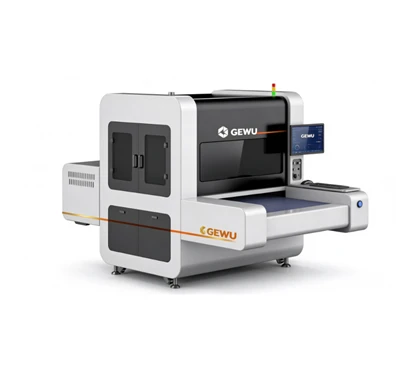
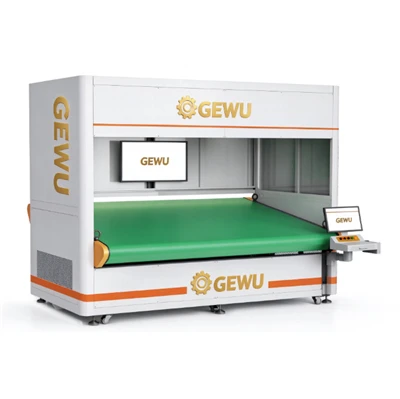
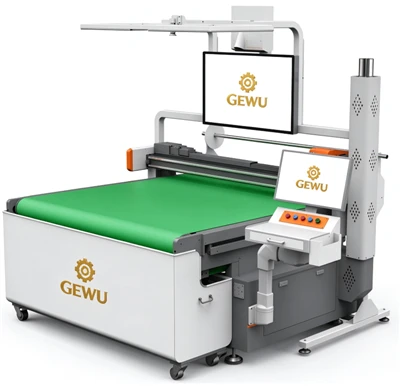
A shoe material cutting machine addresses both problems simultaneously. By combining intelligent nesting algorithms with high-speed automated cutting, it reduces the amount of material that ends up as waste while increasing the number of pieces produced per hour. The mechanisms behind these improvements are distinct but interconnected.
Reducing Material Waste: The Role of Intelligent Nesting
What Nesting Does
Nesting is the process of arranging shoe component patterns on a sheet of material to maximize the usable area and minimize unused space . In footwear production, this task is complicated by the irregular shape of leather hides and the varying quality across different areas of a single hide. Parts that will be highly visible in the finished shoe must be cut from the highest-quality areas, typically along the back of the animal, while lower-quality areas accommodate internal components .
Manual nesting relies on skilled operators who have deep knowledge of both the component shapes and the leather characteristics. This process is time-intensive and produces results that vary depending on operator skill and attention .
How Automated Nesting Improves Material Utilization
Automated nesting software uses geometric algorithms and artificial intelligence to calculate the most efficient placement of components. The software captures the contour of each leather hide, identifies defects and imperfections, and performs automatic nesting that reduces waste .
A study on hybrid nesting automation in footwear production achieved up to 10.18% increase in nested pieces compared to manual methods, while reducing processing time by 98.26% . This means that for the same amount of leather, an automated system can extract more usable components than a manual operator.
The material savings extend beyond the nesting stage itself. Research on CAD/CAM automatic nesting in metalworking-where the underlying algorithms are similar-showed that automatic nesting reduced material waste by up to 36%, decreased cutting time by 25%, and improved material utilization by more than 22% compared to manual placement .
For genuine leather cutting specifically, AI vision systems can detect defects and optimize nesting in real time, eliminating the need for manual selection and adjustment of flaws and contours. These systems improve material utilization and achieve tighter joins between components .
The Environmental and Cost Impact
Reducing material waste has direct financial consequences. For footwear manufacturers working with genuine leather-one of the most expensive raw materials in shoe production-a 10% improvement in material utilization translates into a proportional reduction in leather purchasing costs per pair of shoes.
There is also an environmental dimension. Lower material consumption per pair reduces the resource intensity of production and lowers the carbon footprint associated with leather processing. Complete processing data records support supply chain environmental disclosure and international brand sustainable procurement audits .
Boosting Production Output: Speed, Automation, and Efficiency
Cutting Speed
A shoe material cutting machine with an oscillating knife operates at cutting speeds of up to 1,100 to 1,800 mm/s depending on the model and material . The blade vibrates at high frequency-typically 11,000 to 15,000 RPM-and can rotate 360 degrees to follow complex contours without slowing down.
This speed is achieved without the thermal damage that laser cutting can cause. Oscillating knife cutting produces clean edges without burning or melting, which is critical for materials like EVA foam and synthetic leather that are sensitive to heat.
Continuous Operation and Automation
The production output gains come not only from raw cutting speed but from the machine's ability to operate continuously with minimal intervention.
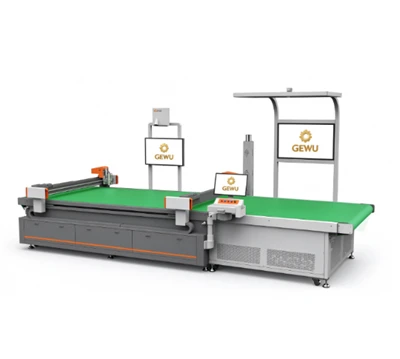
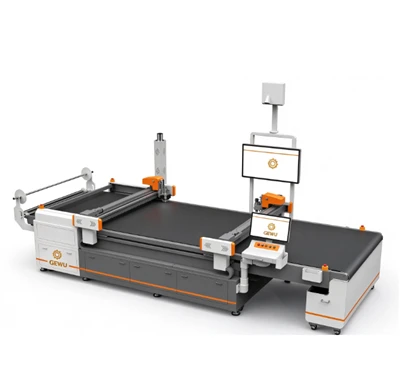
Automatic feeding, cutting, and unloading functions eliminate the manual handling steps that slow down traditional cutting processes . The machine can process materials in sheet or roll form, with the cutting head moving along the X-axis while the material advances along the Y-axis .
Dual-head asynchronous operation allows two cutting heads to work simultaneously on the same work area. While one head performs cutting operations, the other can handle punching or different cutting tasks. This parallel processing significantly increases throughput compared to single-head machines .
Comparison with Traditional Cutting
The productivity difference between CNC digital cutting and traditional die cutting is substantial. A study comparing the two methods found that CNC-controlled cutting machines increase cutting productivity by at least 7 times compared to traditional die cutting presses .
This does not mean die cutting is obsolete for all applications. Hydraulic die cutting remains more efficient for very high-volume production of identical patterns, where the die cost is amortized over thousands of pieces. But for the majority of footwear production scenarios-where styles change seasonally, batches vary in size, and design modifications are frequent-the CNC cutting machine delivers superior overall throughput because it eliminates die changeover time and can switch between patterns by loading a new digital file.
Waste Reduction Contributes to Output
Reduced material waste also has a secondary effect on production output. When nesting is optimized and fewer components are cut incorrectly, there are fewer defects requiring rework or replacement. Every component that is cut correctly the first time contributes directly to finished goods output, rather than consuming production capacity as a defective part that must be discarded and re-cut.
The Combined Effect: Lower Cost Per Pair
The material savings and production output gains compound. A machine that reduces leather waste by 10% and increases cutting throughput by 7 times changes the economics of footwear production. Material cost per pair decreases. Labor cost per pair decreases as automation replaces manual cutting and nesting. And the factory's capacity to fulfill orders within tight delivery windows improves.
For footwear manufacturers producing leather shoes and boots, where material costs represent a significant portion of total production expense, these improvements directly affect competitiveness . The cutting machine is not simply a faster tool-it is a system that changes the relationship between raw material input and finished product output.