Shoe Material Cutting Machine: Hydraulic Die Cutting vs CNC Digital Cutting, What's the Difference?
Two fundamentally different approaches to cutting shoe materials
Walk into any modern footwear factory and you will find two types of cutting equipment working side by side: the hydraulic die cutting press, a workhorse that has served the industry for decades, and the CNC digital cutting machine, a newer technology that has transformed how factories handle small batches and complex designs.
They are not competitors in every situation. Each has strengths that make it the right choice for specific production scenarios. Understanding the difference comes down to one core distinction: hydraulic die cutting uses physical molds and force; CNC digital cutting uses digital files and precision motion.
How Hydraulic Die Cutting Works
Hydraulic die cutting is a stamping process. A custom-made metal die-shaped exactly like the shoe component to be produced-is mounted in the press. The material (leather, synthetic, fabric, or foam) is placed on the cutting bed. When the hydraulic press descends, it forces the die through the material with pressures ranging from 25 to 100 tons .
The cutting force comes from hydraulic cylinders. Four-column designs, common in shoe production, use dual cylinders and self-balancing connecting rods to maintain equal pressure across the entire cutting area. This ensures consistent cuts even when processing thick materials or multiple layers simultaneously . Some hydraulic machines include a feature where the upper board automatically slows down upon contacting the blade, preventing size errors between top and bottom layers .
Hydraulic cutting machines are classified by their structure: swing-arm type, traveling head type, and four-column type. The traveling head design allows the cutting head to move over a stationary table, which is useful for processing large or long materials . The four-column design provides maximum stability and is the preferred choice for high-volume shoe sole and insole production .
How CNC Digital Cutting Works
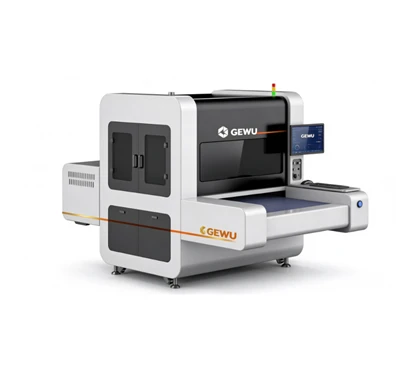
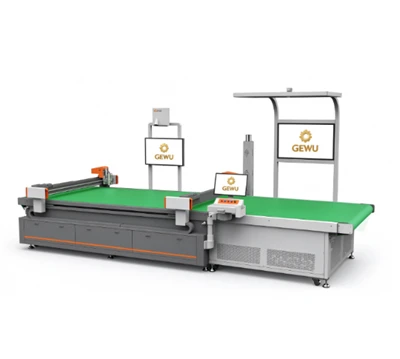
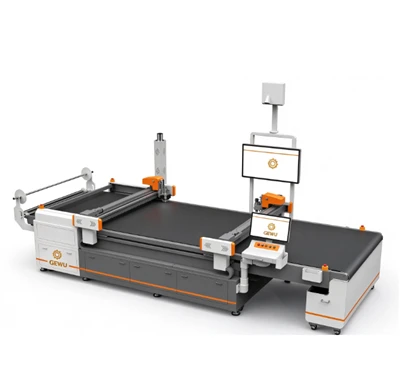
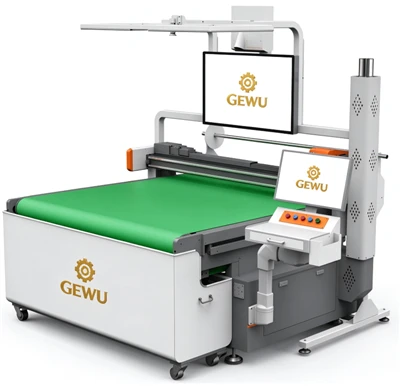
CNC digital cutting operates on an entirely different principle. There are no physical dies. Instead, a digital design file (typically DXF or PLT format) guides a cutting head equipped with a high-frequency oscillating blade .
The blade vibrates at frequencies between 11,000 and 15,000 RPM, cutting through the material without generating heat. This is critical for materials that would burn or melt under laser cutting . The cutting head moves along X and Y axes on precision linear guides, driven by servo motors. Cutting speeds can reach 1,200 to 1,500 mm/s .
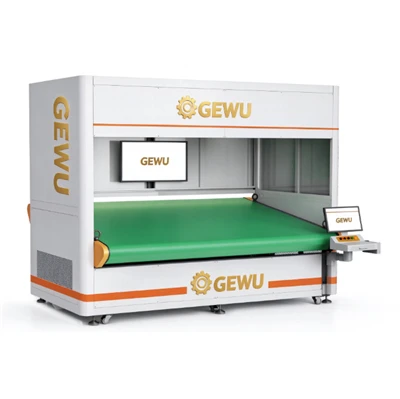
Materials are held in place by vacuum adsorption-air is pulled through the porous cutting bed, creating suction that holds even thin, flexible materials flat without clamps or tape . Many CNC cutting machines also integrate cameras and projectors that recognize the outline of each piece of leather, identify defects and dirty areas, and automatically nest patterns to maximize material utilization .
The cutting head is interchangeable. Different tool heads-oscillating knife, circular knife, V-cut, punching tools, marking pen-can be swapped depending on the material and operation required .
The Core Differences at a Glance
| Aspect | Hydraulic Die Cutting | CNC Digital Cutting |
|---|---|---|
| Cutting principle | Physical die + hydraulic force | Digital file + oscillating blade |
| Die required | Yes-custom metal die per pattern | No-digital file only |
| Pattern changeover | Requires die change (minutes to hours) | Load new file (seconds to minutes) |
| Cutting force | 25–100 tons hydraulic pressure | Blade vibration at 11,000–15,000 RPM |
| Layer capacity | Multiple layers (10+ depending on material) | Typically 1–2 layers |
| Edge quality | Clean, consistent, die-determined | Clean, no burning or melting |
| Material utilization | Depends on manual nesting | Camera-based auto-nesting (3–8% savings) |
| Best for | High-volume, repetitive production | Small batches, custom designs, prototyping |
When Hydraulic Die Cutting Wins
Hydraulic die cutting excels in one scenario above all: high-volume production of the same pattern.
The economics are straightforward. Once the die is made, the cost per cut becomes very low. The press can cycle through hundreds or thousands of pieces per shift with minimal attention. For shoe soles, insoles, and components that are produced in the same shape day after day, the hydraulic press delivers throughput that CNC machines cannot match .
The four-column hydraulic machine is particularly effective for EVA sole cutting. It handles thick, multilayer materials with consistent pressure distribution, and the auto-balance system ensures uniform cuts across the entire work area . Production capacity can reach 800–1,200 cycles per hour for automated models .
The downside is inflexibility. Each pattern requires its own physical die, which costs money and takes time to fabricate. Changing from one shoe style to another means stopping production, removing the old die, mounting the new one, and dialing in the correct pressure and stroke. This changeover time makes hydraulic cutting impractical for small batches or frequently changing designs.
When CNC Digital Cutting Wins
CNC digital cutting excels when flexibility and precision matter more than raw throughput.
Changing a pattern is as simple as loading a new DXF file. No dies to order, no fabrication lead time, no storage space for hundreds of metal molds. This makes CNC cutting ideal for sample rooms, small-batch production, and factories that produce multiple shoe styles on the same line .
The camera and auto-nesting capabilities address a specific problem with natural leather: variability. No two hides are identical. A CNC cutting machine can scan the leather, identify scars, defects, and areas of inconsistent quality, then nest patterns to avoid these flaws and maximize yield . For factories cutting genuine leather, this material utilization improvement translates directly into cost savings.
CNC cutting also handles complex shapes that would be difficult or impossible to achieve with a die. Small holes, intricate curves, and tight tolerances are all within reach. The oscillating blade cuts cleanly without the edge deformation that can occur with hydraulic pressing on certain materials.
The trade-off is speed and layer capacity. CNC machines typically cut one or two layers at a time, while hydraulic presses can cut through stacks of ten or more. For very high-volume production of simple shapes, the hydraulic press remains more economical.
A Practical Guide: Which to Choose
The choice between the two technologies follows a simple decision framework:
Choose hydraulic die cutting if:
You produce the same patterns in large volumes (thousands of pairs per day)
Your designs change infrequently (once or twice per season)
You process thick or multilayer materials
Your patterns are relatively simple
Cost per piece is your primary metric
Choose CNC digital cutting if:
You produce multiple styles in smaller batches
You need rapid changeover between designs
You work with genuine leather where defect avoidance matters
Your patterns are complex or require frequent modification
You do prototyping and sample development
You want to reduce die inventory and storage costs
Many factories operate both. The hydraulic press handles the high-volume production of established styles, while the CNC machine handles samples, small orders, and new designs. Together, they cover the full range of production needs.
The Bottom Line
Hydraulic die cutting and CNC digital cutting are not competing technologies-they are complementary tools serving different production realities. Hydraulic presses deliver speed and cost efficiency for repetitive, high-volume work. CNC machines deliver flexibility and precision for custom, small-batch, and complex cutting.
The question is not which technology is better, but which one matches your production profile. For factories with stable, high-volume product lines, the hydraulic press remains indispensable. For factories that need to respond quickly to design changes and small orders, the CNC cutting machine has become essential equipment.