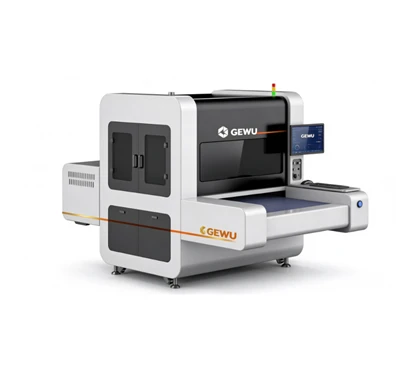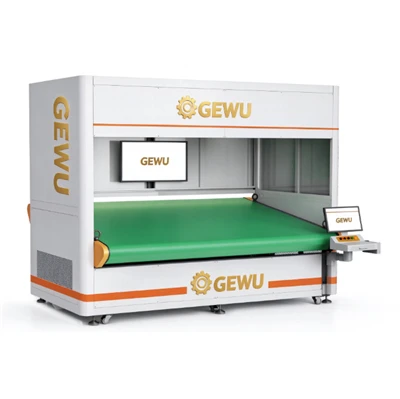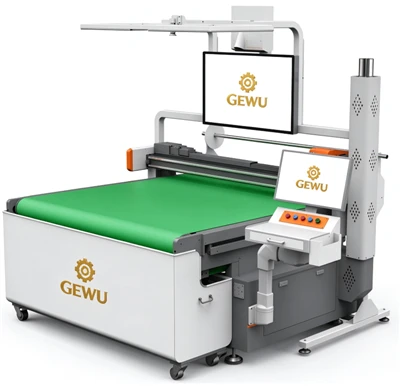
Why Shoe Manufacturers Need EVA Sole Washing Machine for Degreasing Process
EVA foam soles present a unique adhesion challenge in footwear manufacturing. The material is porous, lightweight, and chemically inert-properties that make it excellent for cushioning but difficult to bond. Before any gluing, painting, or UV treatment can succeed, the EVA sole surface must be completely free of grease, mold release agents, and contaminants. This is where an EVA sole washing machine becomes essential to the degreasing process.
The Problem: Why EVA Soles Resist Adhesion
EVA (ethylene vinyl acetate) is a copolymer that does not naturally accept most adhesives. Its surface has low polarity and low surface energy, which means glues cannot properly "wet" the surface or form a strong chemical bond. This inherent incompatibility is why manufacturers apply primers and treatment agents before gluing EVA soles .
But primer alone is not enough. Before the primer can do its job, the EVA surface must be clean. Mold release agents used during the molding process leave an oily residue on the sole surface. This residue creates a barrier between the EVA and any treatment agent or adhesive. If not removed, the release agent will cause the primer to fail, the glue to lift, and the finished shoe to come apart in use.
Traditional surface preparation methods include manual roughening and solvent wiping. Both have significant drawbacks.
Why Traditional Degreasing Methods Fail
Manual roughening (buffing) is the most common traditional method. Workers use sandpaper or grinding wheels to physically abrade the EVA surface, creating a rough profile that gives the adhesive something to grip. This approach has multiple problems: it is labor-intensive, produces inconsistent results, generates harmful dust, and creates noise in the workshop . The surface roughness varies from operator to operator, and the process damages the EVA foam structure.
Solvent wiping uses organic chemicals-typically toluene, methyl ethyl ketone (MEK), or other benzene derivatives-to dissolve oils and release agents. These solvents are effective at removing grease, but they carry serious health and environmental risks. The patent literature on ultrasonic shoe washing explicitly notes that toluene and benzene derivatives are "toxic and harmful," can accumulate in the bloodstream, and are difficult for the human body to metabolize. Long-term exposure can cause occupational disease . The VOC emissions also pollute the workshop environment and contribute to air quality problems .
Additionally, solvent wiping is a manual process. It depends on operator technique, takes time per pair, and often leaves residual solvent that must evaporate before gluing can proceed.
How EVA Sole Washing Machines Solve the Degreasing Problem
Industrial EVA sole washing machines replace both manual roughening and solvent wiping with a closed, automated process. The core technologies vary by machine type, but the degreasing mechanism combines three elements:
Ultrasonic Cavitation
Ultrasonic washing machines operate at frequencies around 28 kHz. The ultrasonic generator creates high-frequency mechanical oscillation in the cleaning bath, which produces microscopic bubbles. When these bubbles collapse near the EVA surface, they generate localized energy that dislodges oils and contaminants from within the foam's open-pore structure . For EVA specifically, the ultrasonic process penetrates the porous material and cleans beyond the surface-something manual wiping cannot achieve.
High-Pressure Spray
Many modern EVA sole washing machines use high-pressure spray technology instead of or in addition to ultrasonic cleaning. Directed jets of hot water or aqueous cleaning solution physically force oils and release agents out of the EVA surface . The spray reaches the entire sole surface and penetrates the porous structure, flushing out embedded contaminants.
Aqueous Chemistry
The cleaning solution itself plays a critical role. EVA sole washing machines use hot water or aqueous (water-based) cleaning agents-not organic solvents. A typical industrial process uses an acidic treatment bath (pH 2.0–2.5) at 50–60°C for EVA, followed by a neutral rinse and then an alkaline neutralization bath (pH 10.5–12) at 45–55°C . The acidic bath breaks down oils and release agents; the alkaline bath neutralizes residual acidity and prepares the surface for primer application.
This aqueous chemistry eliminates the VOC emissions, worker exposure, and environmental hazards associated with solvent-based degreasing. The patent literature describes it as "environmentally friendly and efficient" compared to the traditional methods .
What the Degreasing Process Achieves
When an EVA sole exits the washing machine, three critical changes have occurred:
1. Release agents are removed. The mold release agent that would otherwise block primer adhesion is gone. The EVA surface is clean and receptive.
2. Surface porosity is opened. Ultrasonic oscillation and high-pressure spray break down surface capillaries, exposing fresh EVA material . This increases the effective surface area available for primer and adhesive bonding.
3. Surface energy is improved. The degreased surface has better wettability. Treatment agents and primers can now spread evenly and form the chemical bridge needed for strong adhesion .
The result is a surface that accepts primer uniformly and bonds reliably. Adhesive suppliers explicitly require that EVA surfaces be "dry, clean, free of grease and free of dust" before primer application . The washing machine delivers this condition consistently, pair after pair.
Production Benefits Beyond Degreasing
The degreasing function is the primary purpose, but EVA sole washing machines deliver additional production advantages that make them essential equipment for modern shoe factories.
Consistent quality. Manual roughening and solvent wiping depend on operator skill and attention. Machine washing delivers the same cleaning result for every pair, reducing variability in the gluing process and lowering defect rates.
Higher throughput. Industrial EVA sole washing machines process 700–1,200 pairs per hour, depending on configuration . Cycle times range from approximately 60–90 seconds for high-pressure spray systems to 5–6 minutes for ultrasonic batch systems . This is significantly faster than manual degreasing.
Integrated drying. Most machines include hot air circulation or air knife drying after the washing and rinsing stages. Soles exit dry and ready for the next production step, eliminating the waiting time required for solvent evaporation in manual processes.
Worker safety. Aqueous cleaning eliminates the health hazards of toluene, MEK, and other organic solvents. The closed-system design also prevents operator contact with hot cleaning solutions and reduces exposure to any residual fumes.
Environmental compliance. With VOC regulations tightening in many manufacturing regions, aqueous cleaning provides a path to compliance without sacrificing degreasing performance.
Summary
EVA soles require degreasing before gluing because mold release agents and surface oils prevent adhesives and primers from forming a reliable bond. Manual roughening and solvent wiping-the traditional methods-are inconsistent, labor-intensive, and hazardous. EVA sole washing machines use ultrasonic cavitation, high-pressure spray, and aqueous chemistry to remove oils and release agents from the porous EVA surface, opening the material's structure and preparing it for primer and adhesive. The result is consistent bonding quality, higher production throughput, improved worker safety, and reduced environmental impact. For any footwear manufacturer producing EVA-soled shoes at scale, the degreasing process is not optional-and the washing machine is the most effective way to execute it.