Universal Hydraulic vs Platen Sole Press Machine
When you walk through a footwear factory floor, you'll notice one thing immediately: the sole pressing station looks different depending on what kind of shoes are being made. Some lines have tall, wall-like machines with hydraulic cylinders arrayed around the shoe. Others have low, flat-bed presses where the shoe sits on a solid pad. Both are called "sole press machines," but they operate on fundamentally different principles and serve different production needs.
This article compares universal hydraulic sole presses and platen sole presses - two common configurations in footwear manufacturing. Understanding the differences helps you decide which type fits your production line, rather than relying on what a supplier happens to have in stock.
What "Platen" Means in Sole Pressing
The term "platen" comes from printing machinery, where it refers to a flat plate that presses paper against type . In sole pressing, a platen machine uses a solid, flat pressing surface - essentially a rigid pad or plate - to apply downward force onto the sole and upper assembly.
A platen sole press is the simpler of the two designs. The shoe, mounted on a last, is placed on or against a solid surface. A hydraulic or pneumatic cylinder drives a pressing head or pad down onto the sole, compressing it against the upper . The pressing action is direct, vertical, and mechanical.
This design works well for flat-soled footwear: dress shoes, simple casuals, and EVA bottoms where the sole surface is relatively even and the pressure requirement is straightforward . The solid pad delivers consistent force across the contact area, and there are no airbags or membranes to wear out or replace.
However, the platen design has a limitation that becomes apparent with more complex outsole profiles. A solid pad cannot conform to deep sidewalls, curved edges, or irregular heel shapes. Where the sole surface drops away from the pad, pressure drops to zero. This creates gaps in the bonding - exactly where delamination is most likely to occur under wear.

What "Universal Hydraulic" Means
The universal hydraulic sole press takes a different approach. Instead of a solid pad, it uses a flexible membrane - often polyurethane or a similar airbag material - that inflates under hydraulic or pneumatic pressure to wrap around the entire shoe . The pressure is not vertical-only; it is 360-degree, adapting to the outsole's shape as the membrane expands.
The "universal" in the name refers to this adaptability. The same machine can press dress shoes, sneakers, heavy boots, and athletic footwear without changing tooling, because the membrane conforms to whatever shape is placed against it . For factories producing mixed orders or a range of styles, this eliminates the setup time and tooling costs associated with dedicated pads.
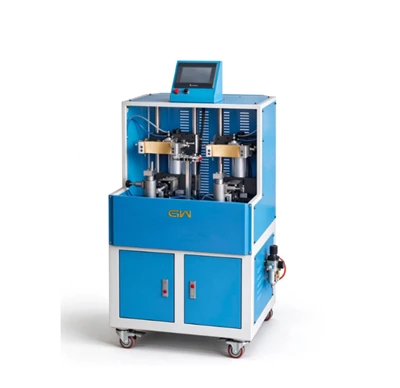
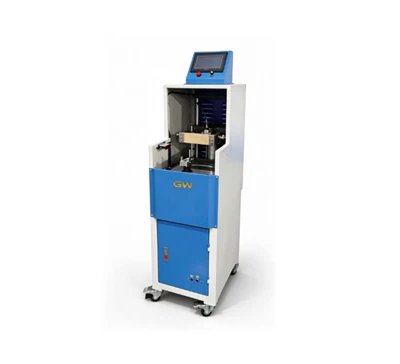
Hydraulic drive provides the force. Working pressures in the 4 MPa range are common for wall-type machines , with the hydraulic system delivering sustained pressure throughout the pressing cycle. The wall-type configuration - so named because the machine has a vertical pressing structure that resembles a wall - positions hydraulic cylinders around the shoe to apply side pressure, edge pressure, and front/back tightening simultaneously or in sequence .

How the Two Systems Apply Pressure
The core mechanical difference lies in pressure distribution.
Platen press: Pressure is applied primarily in one direction - downward. The solid pad or plate presses the sole against the upper. The contact area is limited to where the rigid surface meets the sole material. For flat soles with simple geometry, this is sufficient. The pressing force is direct and predictable. The machine is mechanically simpler, with fewer components that can fail. Maintenance is straightforward: hydraulic seals, a pressing cylinder, and the pad surface. The platen design also handles high pressing forces well, since there are no flexible membranes that might rupture under sustained load.
Universal hydraulic press: Pressure is applied from multiple directions. The membrane inflates and wraps around the shoe, pressing the sole against the upper from below, from the sides, and from the heel simultaneously . This multi-directional force is critical for outsoles with walled edges, deep contours, or complex geometry where a vertical press would miss the bonding surfaces entirely. The trade-off is complexity: the membrane must be thick enough to resist tearing, the hydraulic circuit must maintain consistent pressure as the membrane expands, and the system requires more maintenance attention than a simple solid pad.
Matching Machine Type to Footwear Type
The selection between these two configurations is largely determined by the products you make.
A platen sole press is typically the right choice for flat-soled dress shoes, simple casuals, and EVA bottom shoes where the sole geometry is flat and the bonding surface is uniform . The machine footprint is often smaller, and the investment is lower. For factories producing a narrow range of simple styles at steady volume, the platen design delivers reliable results without the overhead of membrane maintenance.
Universal hydraulic presses become necessary when outsole complexity increases. Sneakers with sculpted midsoles, heavy boots with deep heel cups, and any shoe with walled or wrapped edges require pressure that a flat pad cannot provide . The membrane wraps into contours that would otherwise be unreachable, ensuring adhesive contact across the full bonding surface.
The wall-type hydraulic configuration adds another capability: independent side pressing. Multiple hydraulic cylinders arranged around the shoe can be controlled individually, allowing operators to adjust edge pressure for different shoe sizes and shapes . Some models feature automatic rotating pressure blocks that conform to the shoe's curvature without manual adjustment, ensuring even edge bonding .
Production Capacity and Efficiency
Both machine types are available in configurations ranging from single-station to multi-station rotary designs. A typical wall-type hydraulic machine can produce around 2,500 pairs per 8-hour shift . Platen machines vary widely in capacity depending on automation level, from manual loading single-station units to higher-throughput models.
The universal hydraulic design often includes features that reduce operator intervention. Automatic positioning systems rotate the pressing blocks to match shoe contours . Some models incorporate quick-release mechanisms for faster shoe loading and unloading. The hydraulic circuit may include oil coolers to prevent overheating during continuous operation, maintaining consistent pressure over long production runs .
Platen machines tend to be simpler to operate. The pressing cycle is shorter, and the skill required to position the shoe correctly is lower. For operations with high worker turnover or where training time is a concern, the platen design offers a gentler learning curve.
Maintenance and Longevity Considerations
The membrane in a universal hydraulic press is a wear item. It contacts the sole and upper directly, and repeated flexing under pressure eventually causes fatigue. Membrane quality - thickness, tear resistance, material formulation - directly affects service life . When selecting a universal press, the membrane specification deserves as much attention as the hydraulic system.
Platen presses have no membrane to replace. The pressing pad or plate is typically a solid, durable surface that withstands repeated cycles without degradation. The hydraulic components - cylinders, seals, valves - require regular maintenance, but these are standard industrial parts with predictable service intervals.
One design consideration for both types is heat management. Hydraulic systems generate heat during continuous operation. Wall-type machines may include oil radiators or cooling circuits to keep hydraulic fluid temperature stable and prevent degradation of seals and oil . Platen machines with smaller hydraulic systems may not require active cooling, but sustained high-pressure operation still benefits from adequate ventilation.
A Practical Selection Framework
When evaluating which type to purchase, consider these questions:
What is the range of outsole complexity in your production? If you primarily make flat-soled footwear with simple geometry, a platen press meets the requirement at lower cost. If your line includes walled outsoles, sculpted midsoles, or athletic footwear with complex shapes, the universal hydraulic design is the appropriate choice .
How much setup time can you afford? Universal presses handle different shoe styles without tooling changes. Platen presses may require different pads or positioning fixtures for different sole profiles. If you run mixed orders with frequent style changes, the universal design saves changeover time.
What is your maintenance capability? Universal presses require membrane inspection and replacement as part of routine maintenance. Platen presses have fewer wear components and simpler service needs. Factor your maintenance team's capacity and spare parts logistics into the decision.
What is your production volume and growth plan? Both types are available in configurations matching different throughput levels. Consider whether your current volume justifies the additional capability of a universal press, and whether future product plans might require that capability anyway.
Neither machine type is universally "better." The right choice depends on the specific demands of your product line, production organization, and quality standards. A factory making uniform dress shoes may find the platen press perfectly adequate and more economical to operate. A factory producing athletic footwear with complex outsole geometry will find the universal hydraulic press not just preferable but necessary for consistent bonding quality.
The key is matching the machine's pressure application method to the physical reality of the shoes you produce. When the pressure distribution aligns with the bonding surface geometry, delamination defects drop, rework decreases, and production efficiency improves. That alignment - not brand, not price alone - is the foundation of a sound equipment decision.