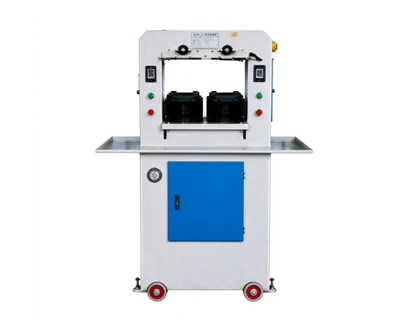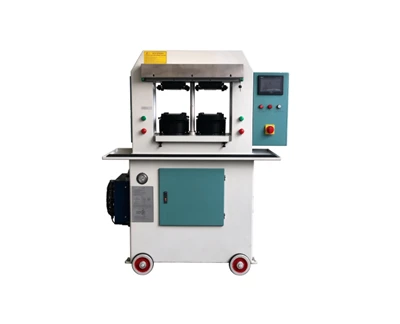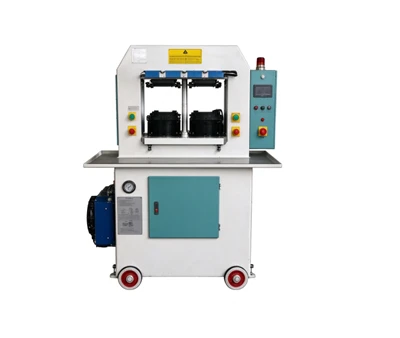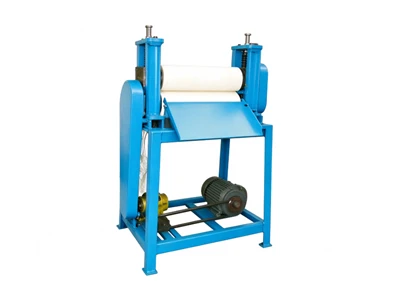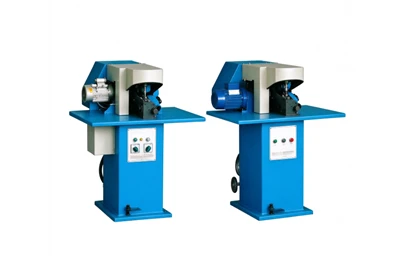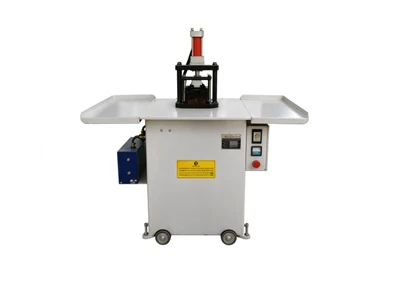
How to Select Automatic Gluing Hammering Machine
Selecting the right automatic gluing hammering machine for your production line is not a decision that should be based solely on price or brand recognition. The machine you choose will determine the quality consistency of your seam processing, the efficiency of your production flow, and ultimately the competitiveness of your finished products in the market.
This guide walks through the key factors you need to evaluate before making a purchase decision - from understanding what the machine actually does, to matching specifications with your production requirements, to assessing long-term operational costs.
What This Machine Actually Does
Before evaluating specifications, it is important to understand the scope of operations an automatic gluing hammering machine performs. This is not a single-function device. A properly equipped machine handles multiple seam processing steps in sequence: seam rubbing (also called seam rub), seam opening, seam leveling, seam gluing, and tape attaching .
These operations are particularly critical in the upper preparation stage of footwear manufacturing. When upper components are stitched together, the resulting seam creates an uneven surface. Seam rubbing flattens this seam, seam gluing applies adhesive along the seam line, and tape attaching reinforces the seam to prevent it from opening during lasting and wear. In traditional production, these steps might require separate machines or manual labor. An automatic gluing hammering machine consolidates them into a continuous process.
The machine is not limited to footwear. It also applies to luggage, cell phone cases, and other leather goods where seam treatment and tape reinforcement are required. If your production involves multiple product categories, this versatility can be a significant advantage.

Core Specifications to Evaluate
Working Voltage and Power Consumption
The standard working voltage for most automatic gluing hammering machines is 220V/50Hz, with maximum power consumption typically around 1.40 kW. However, this is not universal. If your factory operates on a different voltage system - 380V three-phase, for example, or 110V/60Hz for North American markets - you need to confirm whether the manufacturer can supply a machine configured for your power supply.
Power consumption directly affects your operating costs. A machine with lower rated power does not always mean lower actual consumption, because the actual draw depends on duty cycle and heating requirements. But as a baseline, machines in the 1.4 kW range are generally suitable for medium-volume production without placing excessive load on your factory electrical system.
Working Width and Material Thickness
The working width determines the maximum seam length or component size the machine can process in a single pass. This specification should be matched to your largest product dimensions. If you produce footwear in a wide range of sizes, the machine needs to accommodate your largest upper components without requiring multiple passes.
Material thickness capability is equally important. Different upper materials - leather, synthetic, laminated fabrics - vary significantly in thickness. The machine's feed and pressure systems must be adjustable to handle this variation without crushing thin materials or failing to grip thicker ones. Look for machines with adjustable presser foot height and feed pressure settings.
Glue System Configuration
This is where automatic gluing hammering machines differ most significantly from basic models. The glue system determines how precisely and consistently adhesive is applied.
Single vs. dual pump systems: A single-pump machine draws from one glue tank. A dual-pump machine, as found in more advanced models, has two independently operating pumps that can draw from separate tanks - typically left and right . This allows you to switch between two different glue types or colors without stopping production to clean and refill a single tank. If your production involves multiple adhesive specifications, a dual-pump configuration offers substantial efficiency gains.
Glue flow control: The ability to adjust glue outflow speed and quantity is essential for matching different seam widths and material porosity. Look for numerical indication of temperature, outflow quantity, and outflow temperature on the control panel. These parameters should be adjustable independently, not locked to preset values.
Dual protection systems: Some machines incorporate light resistance and parameter dual protection to ensure steady and speedy glue outflow. This type of protection reduces the risk of inconsistent adhesive application caused by fluctuations in glue viscosity or temperature during production.
Control System and Operator Interface
The control panel directly affects how easily your operators can set up and monitor the machine. Touch panel controls with numerical displays provide clearer feedback than analog dials or mechanical switches. Key parameters that should be visible and adjustable include working temperature, glue flow temperature, and outflow quantity.
Consider the learning curve for your operators. A machine with intuitive controls reduces training time and the likelihood of production errors caused by incorrect settings. If your factory operates multiple shifts, consistent parameter settings across operators become even more important.
Motor and Energy Efficiency
The motor type and drive system affect both performance and operating costs. Machines equipped with electric motors and auto tracking systems can achieve energy savings of approximately 40% compared to older drive technologies. This auto tracking feature also contributes to consistent output quality by maintaining stable operating parameters throughout the production cycle.
Maximum speed is another specification to consider. Machines in this category typically operate at speeds up to 3000 rpm. However, higher maximum speed does not necessarily mean better output - the practical production rate depends on material feed speed, operator skill, and the complexity of the seam pattern being processed.
Production Capacity and Throughput
Your production volume requirements should drive the capacity decision. There is no point investing in a high-capacity machine if your actual output never approaches its limits, just as a low-capacity machine will become a bottleneck if your order volume grows.
Beyond raw speed, evaluate the machine's ability to maintain consistent quality at your required production rate. A machine that runs fast but requires frequent adjustment or produces variable results will cost you more in rework and quality control than a slightly slower machine that runs reliably.
Consider the product mix you handle. If you produce a wide variety of styles with frequent changeovers, look for machines with quick-change features for glue tanks, nozzles, and presser feet. If you run long production batches of similar products, setup speed is less critical than steady-state reliability.
Compatibility with Your Existing Production Flow
An automatic gluing hammering machine does not operate in isolation. It is part of a sequence that includes stitching, folding, and other upper preparation operations. Evaluate how the machine will integrate with your existing workflow.
Upstream compatibility: The machine receives stitched upper components from your closing room. If your stitching operations produce seams of varying width or thickness, the gluing hammering machine must be adjustable enough to handle this variation. Otherwise, you may need to tighten stitching tolerances, which could slow your upstream operations.
Downstream compatibility: After gluing and tape attaching, the upper proceeds to lasting or other assembly steps. The tape and adhesive you apply must be compatible with the adhesives and processes used downstream. If your lasting department uses a different adhesive system, ensure that the tape applied by this machine will not interfere with the lasting cement bond.
Footprint and layout: Machine dimensions of approximately 1200 × 540 × 1250 mm are typical for this equipment category. Verify that this footprint fits your available floor space, including clearance for material loading, operator access, and maintenance. Also consider the material flow path - the machine should be positioned so that work-in-progress moves efficiently from the previous operation to the next.
Evaluating the Supplier
The machine itself is only part of the purchase. The supplier relationship determines your access to technical support, spare parts, and long-term service.
Technical documentation: A serious supplier provides detailed specifications, operating manuals, and maintenance schedules. Vague or incomplete documentation is a warning sign that support after the sale may be equally vague.
Spare parts availability: Nozzles, pumps, heating elements, and drive components wear over time. Confirm that the supplier stocks replacement parts and can deliver them within a timeframe that matches your maintenance schedule. If spare parts must be imported with long lead times, factor this into your planning and consider stocking critical spares locally.
Application support: The supplier should be able to advise on glue selection, parameter settings for different materials, and troubleshooting common production issues. This type of application knowledge is often more valuable than the machine hardware itself, especially if this is your first automatic gluing system.
References and experience: Ask about installations in your specific industry - footwear, luggage, or general leather goods. A supplier with experience in your product category will understand the practical challenges you face and can provide more relevant recommendations.
Common Mistakes to Avoid
Buying on price alone: The cheapest machine often carries hidden costs - inconsistent output, frequent breakdowns, poor spare parts availability. Calculate total cost of ownership over the expected machine life, including maintenance, downtime, and quality losses.
Overlooking glue compatibility: The machine's glue system must be compatible with the specific adhesives you use. Some adhesives require higher temperatures, longer open times, or different viscosity ranges than others. Confirm compatibility before purchase, not after installation.
Underestimating operator training: Even the best machine will underperform if operators do not understand how to set it up correctly. Budget time and resources for training, and consider whether the supplier provides on-site or remote training support.
Ignoring future product plans: If you plan to expand into new product categories or materials, assess whether the machine can accommodate those changes. A machine that meets today's needs but cannot adapt to tomorrow's requirements may become obsolete faster than expected.
A Framework for Decision-Making
When evaluating automatic gluing hammering machines from different suppliers, organize your comparison around these dimensions:
Technical fit: Does the machine's working width, thickness capability, and speed match your products?
Glue system: Does it support the number of glue types and precision levels you require?
Control and adjustability: Can operators set parameters easily and consistently?
Throughput: Does its capacity align with your production volume and growth plans?
Integration: Does it fit your floor space, material flow, and downstream compatibility?
Supplier support: Can the supplier provide parts, technical assistance, and industry knowledge?
Total cost: What is the realistic cost of ownership over the machine's lifespan?
The right machine is the one that fits your specific production requirements, not the one with the longest feature list or the lowest price. By working through these factors systematically, you can make a selection that supports your quality standards, production efficiency, and long-term competitiveness.