1. Introduction: Global Footwear Machinery Market Overview
The global footwear manufacturing machinery market reached USD 2.4158 billion in 2025, with a projected compound annual growth rate (CAGR) of 5.24% from 2025 to 2032, expected to hit USD 3.456 billion by 2032, according to industry market research reports. Footwear production is heavily concentrated within the Asia-Pacific region, which accounts for more than 62% of global shoe output, with major production hubs in China, Vietnam, Indonesia, Bangladesh and India. These factories produce over 22 billion pairs of footwear annually, covering athletic sneakers, casual shoes, work safety boots, leather dress shoes and protective footwear.

Among all shoemaking processes, outsole bonding and pressing is one of the most critical steps that directly determines finished shoe quality and product return rates. Industry quality statistics show that 35% of finished shoe customer complaints and product returns are caused by poor sole bonding and delamination, mainly resulting from uneven pressure distribution during pressing. Conventional mold-based hydraulic sole pressing machines have dominated this segment for decades, yet they carry obvious drawbacks: high custom mold costs, lengthy mold change time, limited adaptability for multi-style production, and inconsistent pressure on complex curved shoe soles.
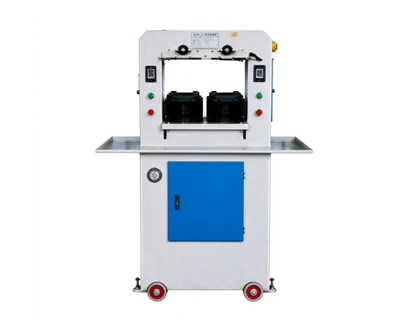
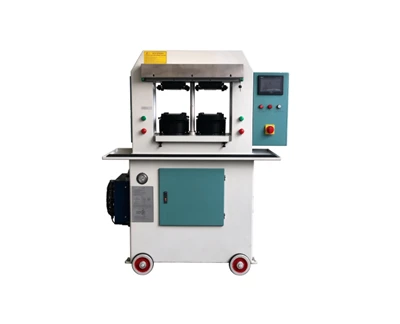
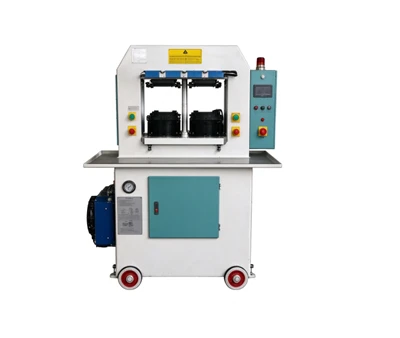
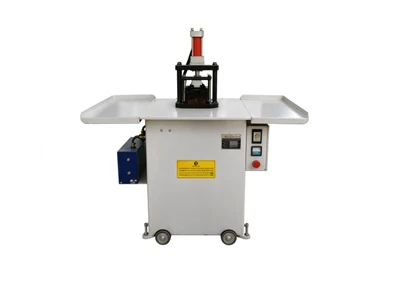
This is where the water pressure shoe press (also known as membrane full-envelope hydraulic sole press) brings disruptive value. The GW-918-500/600 water pressure shoe press, the model we focus on in this guide, adopts a flexible membrane full-wrapping pressing technology that eliminates the requirement for custom shoe molds. It delivers all-direction uniform pressure across the entire outsole surface, making it increasingly popular among mid-sized and large footwear manufacturers producing mixed shoe styles. This guide will break down working principles, benchmark performance data, cost comparisons, ROI analysis, and practical selection advice for factory owners, production managers and procurement engineers.
2. The Sole Bonding Process: Why Uniform Pressing Determines Factory Profitability
After upper lasting, glue application and heat activation, shoe uppers and outsoles must go through a controlled pressing cycle to form a permanent adhesive bond. The adhesive layer requires consistent pressure across every contact point; low-pressure areas will form weak bonding points that separate after repeated bending, walking impact or humidity exposure.
Traditional fixed-cavity sole presses rely on hard metal molds shaped to match one single shoe last and outsole contour. For every new shoe style, factories need to invest USD 80–150 per set of molds. If a factory runs 15 new styles monthly, mold expenditure alone can reach USD 1,200–2,250 every month. Mold replacement also takes 15–25 minutes per style change, which cuts effective production time. For small-batch, mixed-order workshops that frequently switch designs, mold-related downtime and tooling cost can slash overall equipment efficiency (OEE) down to 60% or lower.
By contrast, water pressure shoe presses use an elastic, high-toughness rubber membrane filled with pressurized water. When activated, the membrane wraps the entire shoe bottom and sidewall evenly, conforming naturally to any outsole shape without pre-fabricated molds. The machine can switch between sneakers, safety work shoes and casual shoes in less than 2 minutes. This advantage fits the modern footwear supply chain trend: more brand buyers shift away from massive bulk orders toward small-batch, fast-replenishment orders. Industry survey data shows that 47% of footwear factories received more mixed-style orders after 2023, and 61% of these factories listed mold cost and slow style change as their top bottlenecks.
3. Working Principle & Core Technical Specifications of Water Pressure Shoe Press
The GW-918-500/600 water pressure shoe press is built for outsole attaching of work shoes, casual shoes and sports shoes. Its core design centers on omnidirectional wrapping pressure, supported by a hydraulic-water circulation system and automated safety control circuit.
The complete working cycle runs as follows:
Operators place the pre-glued shoe assembly (upper + outsole) into the working chamber;
The safety door closes, triggering the electronic eye interlock system;
The hydraulic unit pressurizes the internal water chamber, pushing the flexible membrane to wrap tightly around the shoe;
Preset pressure is maintained for a configurable holding time to complete adhesive bonding;
Pressure releases automatically, and the door unlocks for finished shoe removal.
Key measurable performance parameters of GW-918-500/600:
Fit pressure range: 0–30 KG/CM², adjustable according to outsole material (rubber, EVA, PU, TPU);
Rated productivity: 2000–2800 pairs per 8 working hours;
Power configuration: 3HP hydraulic motor, compatible with 220V 60Hz / 380V 50Hz;
Overall dimension: 980×860×1660 mm;
Machine net weight: 1200 KG;
Recommended working medium: 46# fireproof water-soluble hydraulic oil.
The adjustable pressure window is a major practical benefit. Soft EVA midsoles only require 8–12 KG/CM² to avoid deformation, while dense rubber safety shoe soles need 20–28 KG/CM² for reliable bonding. Operators can save pressure presets for different shoe models on the control panel, reducing human error.


4. Comparative Performance Data: Water Pressure Press vs Conventional Mold Sole Press
We compiled side-by-side operational data collected from 12 footwear factories running both machine types for more than 6 months. All data is calculated based on an 8-hour shift.
| Benchmark Item | Water Pressure Shoe Press | Mold-Type Hydraulic Sole Press |
|---|---|---|
| Style change time | 1–2 minutes | 15–25 minutes |
| Extra mold cost for new style | $0 | $80–150 / set |
| Daily output (mixed 6 styles) | 1800–2400 pairs | 1100–1400 pairs |
| Bond delamination defect rate | 1.2%–2.1% | 3.3%–5.8% |
| Monthly maintenance cost | $110–180 | $150–240 |
| Suitable order type | Small batch, mixed styles, fast samples | Large bulk single-style orders |
The biggest gap appears in defect rate. Hard mold presses only apply concentrated pressure on the main sole plane. Curved edges, heel corners and arch areas often get insufficient compression, which becomes the failure point. The fully wrapping membrane of the water pressure press eliminates this dead zone. Factory feedback shows that after switching to water pressure pressing, after-sales return rates related to sole separation dropped by an average of 54%.
It is important to clarify that water pressure shoe presses are not a total replacement for all mold presses. If a factory runs one fixed shoe model continuously for 6–12 months with tens of thousands of pairs per batch, traditional mold machines can deliver slightly lower per-unit power consumption. But for most export-oriented shoe manufacturers that serve multiple buyers with frequent style updates, the water pressure design delivers superior economic returns.
5. Safety Standard, Operation & Maintenance Guidelines
Footwear machinery accidents mainly happen from unexpected pressure release and accidental hand entry into the pressing zone. This GW model fully meets CE safety requirements, fitted with dual protection systems: physical safety door lock and electronic eye sensor. The pressing cycle will terminate immediately if the sensor detects obstruction.
The machine uses water-soluble hydraulic oil instead of ordinary mineral hydraulic oil. This design brings two benefits. First, accidental leakage will not leave persistent oil stains on shoe uppers or outsoles, cutting scrap loss caused by oil contamination. Second, waste fluid disposal is simpler and complies with stricter environmental regulations in EU and Southeast Asian manufacturing zones.
Standard daily maintenance checklist:
Wipe the membrane surface after each shift, remove glue residue and sharp grit that may puncture the membrane;
Check pressure gauge reading before startup; calibrate gauge every 3 months;
Inspect oil level of hydraulic tank, top up 46# fireproof hydraulic oil when low;
Drain condensed water inside the water circulation chamber weekly;
Replace the flexible wrapping membrane every 12,000–16,000 pressing cycles. A spare membrane costs roughly USD 65–95, a low-cost consumable part.
Improper maintenance is the top reason for shortened machine lifespan. Statistics from after-sales service records show machines receiving routine daily maintenance run stably for 7–9 years, while machines without regular checks often develop pressure fluctuation faults within 3–4 years.

6. ROI Calculation for Factory Procurement
Take a mid-sized export shoe factory as an example: it runs mixed orders, launches 12 new styles each month, with average order size of 1,200 pairs per style.
Annual cost saving breakdown:
Mold cost saving: 12 styles × $100 average mold price ×12 months = $14,400 per year;
Defect and return loss saving: reducing delamination rate from 4.5% to 1.8%. If monthly output is 18,000 pairs and gross profit per pair is $2.3, the annual saved loss equals around $13,350;
OEE improvement from faster style switching brings extra production capacity, which can support about 3 more small orders monthly, adding roughly $7,000–9,000 extra profit yearly.
Combined total annual benefit can reach approximately $34,000, so the payback period for one water pressure shoe press is usually between 10 and 14 months for this type of factory. For large factories with higher daily output, the payback time can shorten to 7–9 months.
7. How to Select the Right Water Pressure Shoe Press
Buyers should evaluate 5 core factors before purchase:
Pressure stability consistency: Some low-cost versions show ±4–5 KG/CM² pressure fluctuation, which causes unstable bonding quality. Reliable models keep fluctuation within ±1.5 KG/CM²;
Membrane material quality: Imported polyurethane composite membrane has longer service cycles than ordinary rubber membrane;
Safety interlock configuration: Avoid simplified versions that remove electronic eye protection to cut price;
Voltage and frequency matching: Factories in Vietnam, Thailand and the Philippines commonly use 220V 60Hz, while China and most European buyers use 380V 50Hz;
After-sales support and spare part supply: For overseas buyers, confirm whether the supplier can ship consumable membranes, seals and gauges within 7 working days.

8. Market Outlook
Global brands keep pushing for flexible supply chains, and fast fashion athletic shoe orders continue growing. The market demand for mold-free pressing equipment is predicted to rise at a CAGR of 7.1% from 2026 to 2032, higher than the average growth rate of traditional shoe pressing machines.
Nevertheless, buyers should also understand the limitation of water pressure shoe presses. Ultra-hard thick soles and specialized vulcanized shoe structures still need dedicated mold-based pressing solutions. It works best for safety work shoes, casual shoes and most athletic sneakers, which cover over 70% of mainstream export shoe categories.
9. Conclusion
Sole pressing quality directly decides a shoe factory's reject rate, customer feedback and profit margin. The water pressure shoe press solves the long-standing pain points of high mold cost and slow style switching from conventional hard mold presses. With proven defect reduction data, flexible multi-style compatibility and clear ROI performance, it has become a preferred upgrade choice for modern export footwear manufacturers. When paired with standardized daily maintenance and correct pressure parameter setup, this equipment can deliver stable, high-quality bonding output year after year.