How to Select a Toe Forming Machine
Selecting a toe forming machine is not simply a matter of comparing price and capacity. The machine must match your shoe types, production volume, upper materials, and existing production line. A machine that is too small becomes a bottleneck; a machine that is oversized wastes capital and floor space. The following factors help you identify the right configuration for your factory.
1. Production Capacity and Line Speed
The first consideration is throughput. Toe forming machines are available in a range of capacities, typically rated in pairs per 8-hour shift.
Standard two-hot two-cold machines process approximately 2,800 to 3,000 pairs per 8 hours. Higher-capacity configurations, particularly four-hot four-cold machines, can process more. The right capacity depends on your production line speed. If your lasting line produces 3,000 pairs per shift and the toe forming machine handles 2,800, the machine may become a bottleneck during peak production. If it handles 3,500, it has sufficient buffer capacity to absorb minor stoppages without delaying downstream operations.
Consider whether your factory runs one shift or multiple shifts. A machine rated for 2,800–3,000 pairs per 8 hours can process 5,600–6,000 pairs per day over two shifts, or 8,400–9,000 pairs over three shifts.
Also consider the actual forming time per pair. The machine's rated capacity assumes a certain cycle time, which depends on the material and the required forming and setting times. Thick leather uppers require longer forming times than thin synthetic uppers, which reduces the effective capacity. When evaluating capacity, ask the manufacturer to specify the cycle time for your specific shoe type and material.

2. Station Configuration
The station configuration determines the machine's throughput and how it fits into your production flow. Several options are available:
| Configuration | Description | Suitable For |
|---|---|---|
| Single-station | Hot and cold forming in one station | Small to medium production |
| Dual-station | Separate hot and cold stations | Medium production; faster than single-station |
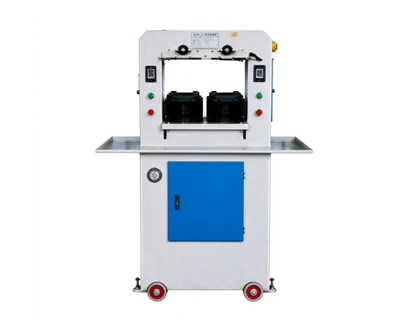
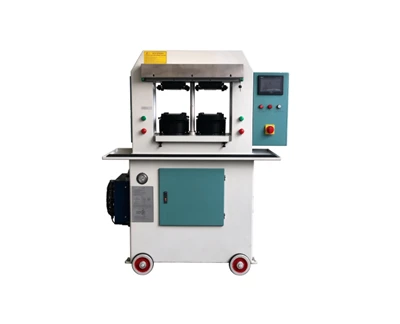
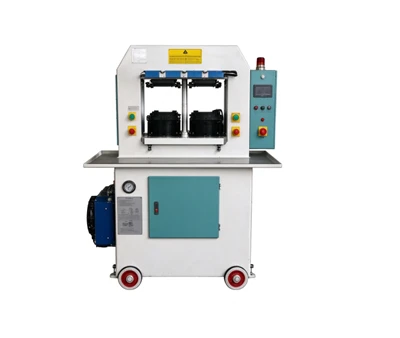
| Two hot + two cold | Two stations of each type; parallel processing | Medium to high production; 2,800–3,000 pairs/8hrs |
| Four hot + four cold | Four stations of each type; highest parallelism | High production; thousands of pairs per shift |
The station configuration also affects how the machine is operated. Machines with more stations may benefit from two operators working in parallel, which increases working efficiency. Consider your available labor when choosing between configurations.
3. Heating System
The heating system affects both the quality of the formed toe and the machine's energy consumption. Several heating methods are available:
Electric heating. The most common method. Electric heating elements bring the forming head to temperature. Electric heating is simple, reliable, and easy to control.
Steam-assisted heating. Hot forming with steam reduces any damage to material appearance and increases production quality compared to machines without preheating or heating systems. Steam transfers heat gently and evenly, which is particularly important for delicate upper materials. Steam-assisted heating is often used in higher-end toe forming machines.
Infrared heating. Some machines use infrared heating to warm the upper material before forming. Infrared heating can be more energy-efficient than contact heating, but it requires careful control to avoid hot spots.
When evaluating the heating system, verify the temperature range, the temperature control accuracy, and whether the system can reach the temperature required for your upper materials.
4. Cooling System
The cooling system sets the formed shape and determines how quickly the machine can complete each cycle. Several cooling methods are available:
Non-frozen liquid circulation cooling system. This cooling method makes forming quickly fixing, evenly, and fine looking on the toe cap section. It provides stable cooling without the complications of a conventional freezing system.
Environment-friendly freezing system. Some machines use a freezing system that reaches -15°C after 10 minutes of running. This delivers rapid cooling for high-throughput production.
Convection air cooling. Employs the principle of convection to recycle air and attain optimal cooling effect under limited consumption. The air cold cooling working system is simple and reliable.
Consider the cooling method in relation to your production volume and energy costs. Freezing systems deliver the fastest cooling but consume more energy. Liquid circulation and convection systems are more energy-efficient but may require longer cooling times.
5. Forming Method and Fixture
The forming method determines how pressure is transmitted to the toe area. Two main methods are used:
Air bag wrapping. The last is wrapped in an air bag so that the shoe bag is tighter and more uniformly against the shoe last. The air bag conforms to the shape of the upper and distributes pressure evenly. This method is more forgiving of slight variations in upper size and shape, making it suitable for factories processing multiple shoe styles on the same machine.
Rigid forming die. A fixed die shaped to match the toe contour. This method delivers precise, repeatable results for a specific shoe style but requires a separate die for each style.
If your factory produces multiple styles in small batches, air bag wrapping offers more flexibility. If you produce a single style in high volume, a rigid die may deliver better consistency. Some machines allow both methods to be used, depending on the production requirement.
6. Adjustability of Parameters
The machine should allow adjustment of key parameters to suit different shoe types and materials:
| Parameter | Why It Matters |
|---|---|
| Temperature | Different upper materials and toe puff types require different forming temperatures |
| Pressure | Affects forming depth and shape accuracy |
| Forming time | Determines how thoroughly the material reaches forming temperature |
| Cooling time | Affects shape retention after removal from the cold station |
| Upper holding clamp stroke | Adjustable to meet different materials or uppers |
Machines with digital controls and programmable settings make it easier to standardize parameters for each shoe type and reproduce those settings on subsequent production runs. A smart computer screen control system, for example, allows the operator to save and recall settings for different shoe styles.
7. Material Compatibility
Verify that the machine can handle the shoe types and upper materials your factory produces. Consider:
Shoe types. Men's shoes, women's shoes, children's shoes, riding boots, safety shoes.
Upper materials. Leather, synthetic leather, fabric, and composite materials.
Toe puff materials. Thermoplastic, leather board, and composite toe puffs.
Size range. Can the machine accommodate the full range of shoe sizes you produce?
If your factory produces multiple shoe types, choose a machine with the adjustability to handle them all without mechanical changeover.
8. Operator Capacity and Labor Requirements
Some toe forming machines are designed for single-operator use, while others allow two people to operate at the same time.
Single-operator machines require one worker to load, activate, and unload the machine. These are suitable for lower production volumes or factories with limited labor.
Dual-operator machines allow two people to operate at the same time, which increases working efficiency. These are suitable for higher-volume production lines.
Consider your available labor and production targets when choosing between single-operator and dual-operator configurations. A machine that requires two operators but only has one available will not achieve its rated capacity.
9. Energy Efficiency Features
Energy consumption is a significant operating cost over the machine's service life. Look for features that reduce energy use:
Auto-sleep under standby mode. The machine automatically sleeps when not in active production, reducing electricity consumption during idle periods.
Steam-assisted heating. Steam transfers heat more efficiently than dry heating, reducing the energy required to reach forming temperature.
Efficient cooling system. Non-frozen liquid circulation cooling or convection air cooling reduces the energy required to maintain the cold setting temperature.
Independent head control. The hot and cold heads can be controlled separately, allowing the operator to set only the temperature and pressure needed for the material being processed.
10. Integration with Your Production Line
The toe forming machine does not operate in isolation. It receives uppers from the preparation stage and passes them to the lasting station.
Consider the following:
Loading and unloading method. Is it manual, semi-automatic, or automatic?
Cycle time. Does the machine's cycle time match your line speed?
Footprint. Do the machine dimensions fit your available floor space? A typical two-hot two-cold machine measures approximately 1,700 × 950 × 1,780mm, though dimensions vary by model.
Utilities. What are the power and compressed air requirements? A typical machine requires 220V/50HZ power, 5.5kW max power consumption, and 0.5–0.6 MPa compressed air input.
Verify that your factory's utilities can meet these requirements without upgrades.
11. Safety Features
Toe forming involves heat and pressure. Verify that the machine includes:
Guarding around the hot station to prevent contact with heated surfaces
Two-hand control or light curtain to prevent hand injury during pressing
Emergency stop accessible from the operator position
Over-temperature protection to prevent the hot station from exceeding safe limits
Steam handling safeguards if the machine uses steam-assisted heating
12. Maintenance and Service Access
The machine's forming heads, heating elements, air bag, and pneumatic components require periodic maintenance. Consider:
Access to forming heads for cleaning and inspection
Access to heating elements and thermocouples for replacement
Access to pneumatic cylinder and valve for seal replacement
Availability of replacement air bags or forming dies
Manufacturer support for technical questions and spare parts
A machine that is difficult to service will be neglected, and neglected maintenance leads to inconsistent forming and premature failure.
13. Manufacturer Support and After-Sales Service
The machine is a long-term production asset. When it breaks down, production stops. The availability of spare parts, technical support, and service response time directly affects your factory's ability to meet delivery schedules.
Before purchasing, verify that the manufacturer has a stable support infrastructure. Ask the following questions:
Does the manufacturer stock common spare parts?
Is there a local service representative or distributor?
What is the typical response time for technical issues?
Can the manufacturer provide references from factories using the same machine model for similar applications?
Is operator training included with the purchase?
Summary Checklist
| Factor | What to Verify |
|---|---|
| Capacity | 2,800–3,000 pairs/8hrs for two-hot two-cold; matches line speed |
| Station configuration | Single, dual, two-hot two-cold, or four-hot four-cold |
| Heating system | Electric, steam-assisted, or infrared; temperature range and control |
| Cooling system | Non-frozen liquid circulation, freezing, or convection air |
| Forming method | Air bag wrapping or rigid die; matches your style range |
| Adjustability | Temperature, pressure, forming time, cooling time, clamp stroke |
| Material compatibility | Shoe types, upper materials, toe puff materials, size range |
| Operator capacity | Single or dual-operator design; matches available labor |
| Energy features | Auto-sleep, steam heating, efficient cooling, independent head control |
| Line integration | Loading method, cycle time, footprint, utilities |
| Safety | Guarding, two-hand control, E-stop, over-temperature protection |
| Maintenance | Access to heads, heaters, air bag, pneumatic components |
| Manufacturer support | Spare parts availability, local service, training |
Summary
Choosing a toe forming machine comes down to matching the machine's capabilities to your production requirements. Capacity must match your line speed. The station configuration must suit your volume and available labor. The heating and cooling systems must deliver the quality your materials require. Adjustability, material compatibility, energy features, and safety all affect the machine's operating cost and flexibility. By evaluating each of these factors against your actual production data, you can select a machine that delivers consistent toe forming quality without becoming a bottleneck or an unnecessary expense.
For footwear manufacturers producing shoes at volume, the toe forming machine is a key piece of equipment for ensuring proper toe fit, appearance, and structural integrity. Taking the time to select the right machine pays off in consistent quality, lower operating costs, and reliable production throughput.