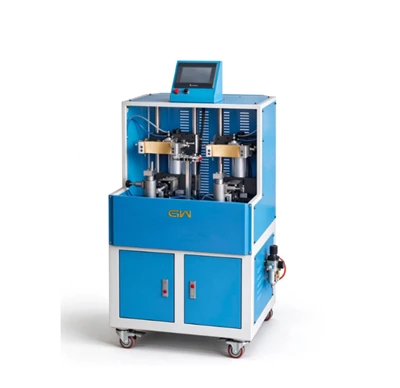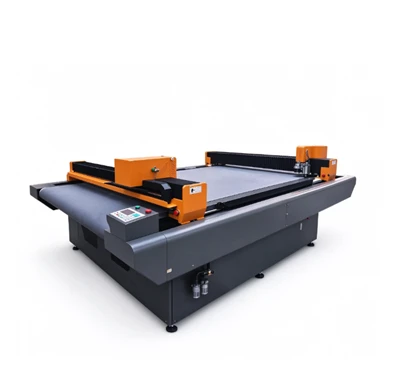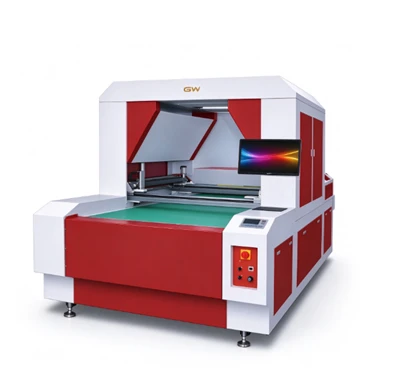
Hydraulic plane die cutters-often called "clicker presses" or "beam presses" in the footwear industry-are the backbone of upper and sole cutting rooms. Unlike swing-arm or traveling-head presses, a plane die cutter uses a large, flat platen that descends uniformly onto a full-bed layout of dies. This design allows multiple dies to be placed side by side and cuts through several layers of material in a single stroke. For factories running synthetic leather, mesh, EVA sheet, or rubber sole stock at volume, the plane press is usually the most efficient way to convert sheet material into cut components. But efficiency only materialises when tonnage, bed size, safety controls, and maintenance practice are correctly matched to the actual material mix.
1. Where the Plane Die Cutter Fits
Footwear cutting equipment is not interchangeable. The material's consistency and value dictate the machine format.
Swing-arm presses are suited to natural leather, where the operator must visually inspect grain, scars, and stretch direction before each cut. The swinging arm lets the die be positioned freely over the hide, maximising yield from expensive, irregular material.
Plane die cutters, by contrast, are designed for materials that are uniform in thickness and quality-synthetic leather, PU, mesh, industrial fabric, EVA sheet, and rubber sole stock. Because the material does not require per-piece visual selection, multiple dies can be arranged across the bed and cut in one press cycle, often through multiple layers simultaneously. This is the core economic argument for the plane format: it trades the flexibility of single-die positioning for throughput on uniform stock.
A third category, the traveling-head (gantry) press, moves a single cutting head across a beam. It offers better sightlines for large or heavy dies but generally processes one die position at a time. The plane press remains the fastest option when the job is a full-bed layout of small-to-medium dies on consistent material.
2. How the Hydraulic Plane Press Works
The machine converts electrical energy into hydraulic pressure, which drives a piston to push the upper platen downward against the die and material on the cutting bed. Three design details separate a competent plane press from a marginal one.
Two-cylinder, four-column balance. The platen is guided by four columns and driven by twin cylinders with a self-balancing linkage. This keeps the platen parallel to the bed across its full width. Without this balance, cuts on one side of the bed can be incomplete while the other side over-penetrates the cutting board, producing inconsistent parts and accelerated die wear.
Controlled descent at contact. On better presses, the platen slows automatically when it contacts the die edge. This "kiss-cut" or controlled-penetration behaviour prevents the sudden impact that causes dimensional error between the top and bottom layers of a stack. It also protects the die edge and extends cutting board life.
Pressure build-up after contact. In hydraulic cutting, the system pressure does not necessarily reach the rated maximum at the instant of contact. Pressure rises as the die penetrates the material, and the directional valve reverses once the cut is complete. This means the effective cutting force is a function of both the preset pressure and the dwell time at contact. Operators who understand this can fine-tune pressure and stroke to suit different material stacks without running the pump at full load unnecessarily.
3. Tonnage and Bed Size: The Two Numbers That Decide Everything
Most buying mistakes trace back to under- or over-specifying tonnage and bed area. Tonnage should be calculated from the die perimeter, material thickness, and shear strength-not chosen by habit.
A practical starting formula is:
F_cut = L × t × σ_shear
where L is the total cutting perimeter of the dies on the bed (mm), t is the total stack thickness (mm), and σ_shear is the material's shear strength (N/mm²). Apply a safety factor of 1.5–2.0 to account for die wear, material variation, and lamination adhesion, then select a press whose rated tonnage exceeds the result by a further 10–20%.
The table below translates common footwear materials into practical press ranges.
| Material (footwear use) | Typical stack thickness | Shear strength estimate (N/mm²) | Die size class | Practical press range |
|---|---|---|---|---|
| Light leather / PU upper (1–2 mm per layer) | 2–6 mm | 15–30 | Small (perimeter <300 mm) | 20–40 T |
| Heavy leather / reinforced upper (3–5 mm per layer) | 6–15 mm | 30–50 | Medium (300–800 mm) | 40–100 T |
| Rubber sole sheet (3–8 mm) | 8–16 mm | 10–25 | Medium–large | 60–150 T |
| Plasticized PVC / EVA sheet (1–3 mm per layer) | 5–12 mm | 20–40 | Medium | 50–120 T |
| Multi-layer synthetic upper stack | 10–25 mm | 40–80 | Large (>800 mm) | 120–300 T |
Shear strength values are engineering estimates for typical footwear materials. Confirm with the material supplier and run a trial cut before committing to a press size.
Bed size is the second constraint. A 1600 × 610 mm bed is common in footwear because it accepts a practical layout of upper or sole dies while keeping the machine footprint manageable. A wider bed-1600 × 800 mm or larger-allows more dies per stroke but demands more tonnage to maintain pressure per unit area and requires more floor space. The correct bed size is the smallest one that holds your standard die layout without excessive dead space.

4. Safety and Control: Why Two-Hand Operation Is Non-Negotiable
A hydraulic plane press concentrates 30–35 tonnes of force onto a platen edge. The die-closing zone is unforgiving. Two-hand control is the baseline safety architecture: the operator must depress two separate buttons simultaneously to initiate the downstroke, and releasing either button stops the stroke.
This is not a convenience feature. It is a deliberate design that keeps both hands outside the danger zone during the hazardous portion of the cycle. Regulatory guidance on power presses treats two-hand control as a safeguarding measure that must prevent the clutch from tripping unless both actuators are engaged, and must stop the slide if either actuator is released mid-stroke.
In practice, footwear factories should combine two-hand control with:
Fixed or interlocked guards around the platen path where the die layout allows.
Anti-repeat logic so that holding both buttons down does not produce a second stroke without a deliberate release and re-press.
Clear floor marking and a rule that no hand enters the die area until the platen is fully up and stationary.
Two-hand control alone does not protect bystanders or assistants; it protects only the operator who is using the buttons. For two-person die-loading operations, each operator should have their own control station, or the press should be fitted with presence-sensing or light-curtain protection.
5. Setting the Cut: Stroke, Pressure, and Die Contact
A plane press will cut well only if the stroke and pressure are set for the die height and material stack. The platen does not need to travel far; it needs to stop at the right depth.
The cutting stroke is typically adjustable across a range such as 50–150 mm or 50–250 mm. In normal production, the platen should stop with roughly 50 mm of clearance above the die top at the start of the cycle, then descend to the depth where the die just penetrates the cutting board slightly. If the die is pressed too deeply into the board, the board wears rapidly and the die edge dulls. If the penetration is insufficient, the bottom layer of a multi-layer stack remains uncut, producing ragged edges and dimensional error.
Pressure setting is a separate adjustment from stroke. Many presses use a pressure-control handwheel: turning it clockwise increases cutting force, anticlockwise reduces it. The correct setting is the lowest pressure that produces a clean cut through the full stack without crushing the material or embedding the die into the board.
Whenever the die height, material stack, or cutting board changes, the stroke and pressure must be reset. Running a new die at an old setting is one of the most common causes of die damage and board replacement cost.

6. Precision, Repeatability, and What "Accuracy" Actually Means
For footwear cutting, accuracy is not usually an issue of sub-millimetre positioning; it is an issue of consistency across the bed and across the stack.
The dominant precision variables are:
| Variable | Effect on cut quality | Practical control |
|---|---|---|
| Platen parallelism | Uneven cut depth across the bed; some dies cut through, others do not | Four-column balance linkage; periodic alignment check |
| Pressure consistency | Top layers cut cleanly, bottom layers tear or remain uncut | Correct tonnage for the stack; pressure gauge calibration |
| Die condition | Rounded or chipped edges increase required force and produce fuzzy cut edges | Die inspection and sharpening schedule |
| Cutting board flatness | Grooves and depressions cause uncut spots and inconsistent penetration | Board rotation and replacement before deep grooving |
| Operator loading | Dies placed off-centre create side loading and uneven wear | Marked die layout; central loading rule |
A well-maintained plane press can hold cut-part dimensional variation within a fraction of a millimetre on uniform material, but the practical target in footwear is clean separation on every layer and repeatable fit at stitching and lasting. That depends more on parallelism, die sharpness, and board condition than on the press's nominal tonnage.
7. Maintenance That Protects Uptime
Plane presses are mechanically robust, but hydraulic and lubrication neglect shows up as inconsistent pressure and short die life.
Spindle bearing lubrication. Some presses use a self-lubricating spindle bearing that eliminates daily manual greasing. Where manual lubrication points remain, a missed greasing interval increases friction and can cause erratic platen movement.
Hydraulic oil and filtration. Hydraulic oil degrades with heat and contamination. Periodic oil changes and filter cleaning are required to maintain stable pressure output, especially on multi-layer cutting where the pump works continuously. A press that gradually loses cutting force is often suffering from worn seals or a clogged filter, not from a need for more tonnage.
Cutting board management. The plastic or composite cutting board is a consumable. Rotating it periodically spreads wear across the surface; replacing it before deep grooves form protects both cut quality and die edges.
Die storage and inspection. Dies should be stored flat and inspected for bent or dulled edges. A dull die on a plane press increases the required tonnage and can push the machine beyond its efficient operating range on thick stacks.
8. Automation and the Direction of the Category
The manual plane press remains the workhorse, but the category is moving toward automated feeding and servo-controlled pressure. Automatic feeding variants use a conveyor or sliding table to present material to the cutting zone, reducing operator fatigue and increasing strokes per shift. On the control side, servo-hydraulic systems allow programmable pressure profiles and stroke positions, so a single machine can switch between a light upper stack and a heavy sole stack with stored settings rather than manual re-adjustment.
For a footwear factory, the decision is not "manual versus automatic" in the abstract. It is a question of how many die changes and material changes occur per shift. A plant running long runs of the same sole component may justify an automatic feed plane press. A plant running many small upper orders may be better served by a flexible manual plane press with quick-change die handling and clear pressure/stroke setting controls-provided the safety architecture is sound.
FAQ
What is the difference between a plane die cutter and a swing-arm press?
A swing-arm press moves a single die head to any position over the material, which suits natural leather where the operator selects the best grain area for each cut. A plane press uses a full-bed platen and cuts multiple dies in one stroke, which suits uniform synthetic materials and multi-layer stacks.
Can a plane press cut multiple layers of material?
Yes. Multi-layer cutting is one of its main advantages. With correct tonnage and a sharp die, a plane press can cut through stacks of synthetic upper material, EVA sheet, or fabric. The number of layers depends on total thickness, material compressibility, and die perimeter; pressure and stroke must be set for the specific stack.
How do I choose the right tonnage?
Calculate the total die perimeter on the bed, multiply by stack thickness and material shear strength, apply a 1.5–2.0 safety factor, and choose a press rated at least 10–20% above that figure. The table in Section 3 gives starting ranges for common footwear materials.
Why is two-hand operation required?
Because the die-closing zone is a severe crush hazard. Two-hand control forces both hands to be on separate buttons during the downstroke, keeping them outside the danger area. Releasing either button stops the stroke. It is a fundamental safeguarding measure, not an optional convenience.
What maintenance has the biggest effect on cut quality?
Keeping the cutting board flat and rotating it before deep grooves form, maintaining die sharpness, and preserving hydraulic pressure stability through oil and filter changes. Platen parallelism should also be checked periodically; an out-of-parallel platen produces uneven cut depth across the bed regardless of tonnage.
Summary
A hydraulic plane die cutter is the highest-throughput cutting format for uniform footwear materials, but its advantage depends on matching tonnage to the die layout and stack, maintaining platen parallelism, setting stroke and pressure for each die change, and enforcing two-hand safety control. Buyers who calculate tonnage from die perimeter and material shear strength-rather than copying a neighbouring factory's specification-and who treat the cutting board and die condition as production variables rather than consumables to ignore, get the most reliable output per shift from this machine category.