Introduction
Sole pressing is the core bonding station in shoe manufacturing. After applying adhesive between upper and outsole, the sole press applies controlled, uniform pressure for a fixed dwell time to eliminate air bubbles and ensure permanent bonding. Poor pressing quality leads to sole delamination, edge gaps, customer complaints and high reject rates, which greatly hurt factory profit and brand reputation.
Many footwear factory owners face confusion when sourcing sole press machines. Different shoe styles, daily output targets, workshop conditions and automation plans require different pressing technologies. Some factories buy low-cost machines only to struggle with unstable pressure, oil leakage, frequent breakdowns and high after-sales costs. Others purchase high-end fully automatic machines without enough skilled operators or matching production lines, resulting in low utilization and wasted investment.
This buying guide covers working principles of all mainstream sole press types, core selection criteria, quality defect analysis, maintenance checklist, detailed parameter comparison table and after-sales evaluation standards. Whether you run a small artisan workshop, medium leather shoe factory or large smart footwear plant, you can find clear references to choose the best sole press machine for your production.

How Sole Pressing Affects Shoe Quality
The pressing result depends mainly on three factors: pressing force, pressure distribution and dwell time.
Pressing force: Too low → incomplete bonding and easy delamination. Too high → deforms shoe upper, crushes soft midsoles or damages shoe shape.
Pressure uniformity: Uneven pressure creates hidden air gaps along shoe edges. These gaps slowly separate after repeated bending during wearing.
Dwell time: Insufficient pressing time stops adhesive from fully curing. Over-long time reduces production efficiency without extra quality improvement.
Different shoe materials require different pressure settings. Leather welt shoes and safety work boots need heavy, stable pressure. Sneakers with soft EVA midsoles need moderate and evenly distributed pressure to avoid midsole deformation.
Main Types of Sole Press Machines
1. Universal Hydraulic Sole Press
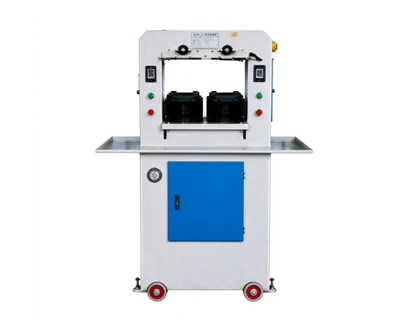
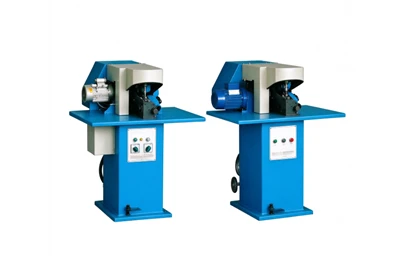
The universal hydraulic sole press uses hydraulic oil cylinders to deliver strong, stable pressure. It is widely adopted for leather shoes, welt shoes, flat shoes and long/half-long boots. It can finish bottom pressing, edge pressing and front & rear tightening in one single cycle, and also supports independent single-function operation. The multi-row hydraulic cylinders adapt to irregular shoe edge contours with no dead-angle pressing. The servo upgraded version solves the common summer high oil temperature problem and cuts power consumption by over 30%. It is the most cost-effective choice for medium-sized leather shoe factories.
2. Automatic Wall Bottom Press
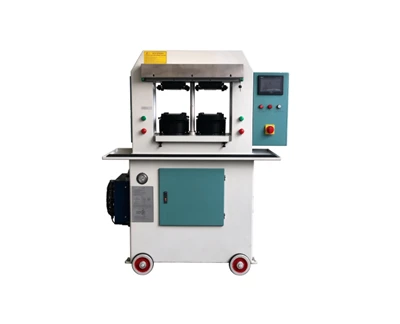
Wall-type sole press is popular for sneakers and casual footwear. Its unique rotatable lateral pressing blocks automatically rotate to fit shoe curve, delivering evenly distributed pressure around shoe edges. The barrier-free worktable allows easy shoe loading, and front/rear pressure adjustment can be completed with one hand to reduce operator fatigue. The lever balanced presser foot effectively reduces oil leakage trouble, and covers a wide shoe size range from size 14 up to size 48. It is a preferred model for factories with large sneaker orders and mixed size production.
3. Fully Pneumatic Bottom Press
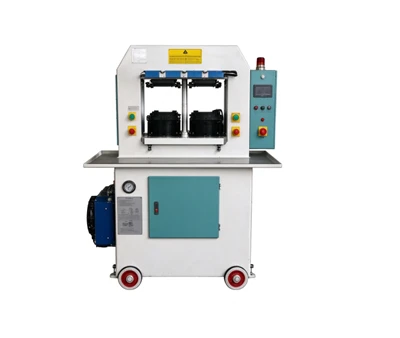
Pneumatic sole press uses air cylinders instead of hydraulic oil. There is no hydraulic oil leakage, keeping the workshop clean. Pneumatic systems feature fast response and short cycle time to raise hourly output. Front and rear tensioners adopt servo stroke control for simple and precise adjustment. It is suitable for factories that want low maintenance and oil-free workshop environment. It requires an external air compressor as supporting equipment.
4. All Electric Bottom Press
All-electric sole press replaces hydraulic cylinders with servo electric cylinders. Its four-bar mechanical structure provides strong thrust without oil pollution. Full servo control allows flexible adjustment of pressing sequence and pressure recipes. Pressure, time and cycle data can be automatically collected, saved and exported. Equipped with PLC and IoT module, it supports data statistics and remote monitoring, fitting smart digital shoe factories pursuing clean production and traceable production records.
5. Fully Automatic Non-Mold Pressing Machine
This robot integrated non-mold press removes the need for shoe molds. It achieves 360° all-round pressing, works for different shoe sizes and left/right shoes without mold replacement. The truss robotic arm realizes automatic loading and unloading, supporting unmanned operation. It can be directly connected with automated shoe assembly lines, greatly cutting labor cost. It is ideal for large factories with frequent style changes and high automation requirements.
6. Fully Automatic Hydraulic Bottom Press
Equipped with double-axis truss robotic arm and gantry frame, this servo hydraulic bottom press features visual detection system. The system automatically identifies shoe size and adapts 束紧器 and pressure rod position. Servo hydraulic system realizes digital pressure and flow adjustment and solves high oil temperature issue. It connects to automatic production lines for continuous unmanned shoe bottom pressing.
Key Factors To Select A Sole Press Machine
Shoe types & materials Check your main products: leather welt boots, safety shoes, casual sneakers, rubber-soled shoes or soft EVA footwear. Heavy-duty boots require higher pressing force; soft sneakers need gentle, uniform pressure to avoid deformation.
Daily production volume Calculate pairs per 8-hour shift. Low volume can use semi-automatic single station models. Mass production needs double-station or fully automatic robotic presses.
Workshop utility conditions Check power supply: 220V or 380V. Pneumatic machines require air compressor and stable air source (≥0.4Mpa). Measure workshop floor space to match machine outer dimensions.
Maintenance budget & workshop requirement Hydraulic machines need regular oil replacement and seal inspection. Pneumatic and all-electric models have fewer wearing parts and zero oil leakage risk, reducing cleaning and maintenance work.
Automation & smart factory requirement If you need production traceability, data recording and remote monitoring, select machines built with PLC and IoT system.
Safety standard Good sole presses come with emergency stop button, two-hand safety operation and safety protective covers to prevent operation injury. CE certification is recommended for export-oriented factories.

Sole Press Machine Parameter Comparison Table
| Machine Type | Model | Voltage | Power | Output(pairs/8h) | Weight | Outline Size(L×W×H) | Key Feature |
|---|---|---|---|---|---|---|---|
| Universal Hydraulic Sole Press | GW-966C | 220V | 2HP | 1500 | 600kg | 600×1100×1850mm | Unilateral, for flat shoes & long boots |
| Automatic Wall Bottom Press | GW-968A | 380V | 2.2kW | 1500 | 1.2T | 1300×950×1850mm | Auto rotary side press block, size 14–48 |
| Fully Pneumatic Bottom Press | GW- | 220V | 800W | 2000-2720 | 1.2T | 1250×1090×1850mm | Oil-free, fast pneumatic response |
| All Electric Bottom Press | GW- | 220V | 9.5kW | 2000-2720 | 1.2T | 1320×900×1800mm | Servo electric cylinder, digital data record |
| Fully Automatic Non Mold Press | GW- | 220V | 3kW | 1200-1600 | 1.8T | Custom | Robot loading, no shoe mold needed |
| Fully Automatic Hydraulic Bottom Press | GW- | 380V | 7.5kW | 960-1200 | 1.9T | 2300×1370×2900mm | Truss robot, visual detection |
Common Pressing Defects & Root Causes
Sole delamination / easy peeling Causes: insufficient pressure, too short dwell time, uneven pressure distribution, poor adhesive coating, worn press block. Solution: Recalibrate pressure and pressing time; inspect press block flatness; standardize glue application process.
Air bubbles along shoe edge Causes: pressure not evenly distributed; shoe not correctly positioned before pressing. Solution: Use machines with 360° balanced pressing structure; train operators for accurate shoe placement.
Deformed shoe upper or crushed midsole Causes: Over-high pressure; pressure rod position misaligned. Solution: Reduce pressing force; use adaptive positioning system.
Oil stain on shoe upper (hydraulic models) Causes: Oil seal aging, oil leakage of hydraulic cylinder. Solution: Check seals regularly; upgrade to pneumatic or electric machines if oil contamination is not allowed.
Preventive Maintenance Checklist
Daily check
Clean pressing blocks and remove glue residue and debris
Check power / air pressure and oil level
Test emergency stop function
Listen for abnormal noise during running
Weekly check
Inspect hoses, seals, wiring and fasteners
Lubricate moving guide rods
Calibrate pressure reading
Monthly check
Replace air filter or hydraulic filter
Inspect wearing parts, replace aging seals
Back up production data records
Full safety function test
Common Buying Mistakes
Judge only by price. Cheap machines often have unstable pressure and short service life, leading to high reject rate and frequent downtime. Total ownership cost is higher in long run.
Overbuy automation. Fully automatic robotic machines need skilled technicians, stable power supply and continuous large orders. Small factories may suffer low utilization.
Ignore after-sales and spare parts supply. Shoe machine spare parts must be available quickly. Long waiting time for parts stops whole production line.
Neglect sample testing. Before purchase, send your shoe samples to test pressing effect. Parameters on spec sheet do not equal real performance on your shoe styles.
ROI & After-sales Evaluation
When comparing suppliers, do not only compare machine price. Calculate total cost including transportation, installation, operator training, warranty and spare parts cost. Recommended after-sales requirement:
At least 12-month warranty
Remote video technical support
Fast spare parts delivery
On-site installation and training option
A reliable supplier can help you set pressure recipes for your shoe styles, train operators and provide continuous technical support.
Conclusion
There is no single "best" sole press machine for every footwear factory. Your shoe styles, daily production volume, workshop layout, budget and automation plan determine the most suitable model.
Small & medium leather shoe factories: Universal hydraulic sole press GW-966C or wall bottom press GW-968A, stable performance and reasonable cost.
Factories requiring clean oil-free workshop: Fully pneumatic bottom press or all-electric bottom press.
Large smart factories with high-volume mixed styles: Fully automatic non-mold press or servo hydraulic robotic bottom press.
Before final purchase, test your actual shoe samples on target machine to verify bonding quality. Our team offers sample testing, machine selection consultation and customized solution for your shoe production line. Contact us for more technical data and quotation.
FAQ
Q: Which sole press machine has zero oil leakage? A: Fully pneumatic bottom press and all-electric bottom press adopt air cylinder or servo electric cylinder instead of hydraulic oil. They have no oil leakage risk and keep workshop clean.
Q: Does non-mold sole press require shoe molds for every style? A: No. Non-mold press uses robotic and visual positioning system. It can press different sizes and left/right shoes without changing molds, saving mold making cost for frequent new styles.
Q: Wall type sole press vs universal hydraulic sole press, what is the difference? A: Wall bottom press works great for sneakers, with rotating side blocks for shoe edge fitting. Universal hydraulic sole press has wider compatibility for flat shoes, welt shoes and long boots.
Q: How long is the standard pressing dwell time? A: Normally 8–12 seconds, depending on adhesive type, sole material and shoe structure. The machine with data recording function can save different time-pressure recipes for different shoe styles.
Q: Do I need an air compressor for hydraulic sole press? A: Standard hydraulic sole press does not need air compressor. Only pneumatic sole press requires stable air supply.