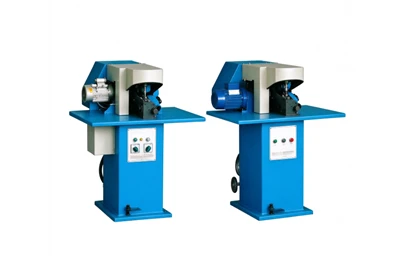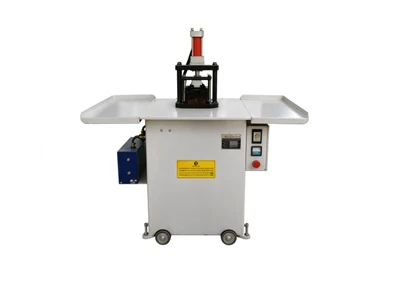
1. Overview of Sole Pressing Process in Footwear Manufacturing
Shoe manufacturing is a sophisticated, multi-stage industrial craft that combines material science, mechanical engineering and process control. Among all production workflows, sole attaching, also widely known as sole pressing, stands out as one of the most decisive core processes. This operation bonds the shoe upper and outsole firmly together. The quality of sole pressing directly governs multiple key indicators of finished footwear, including peel strength, long-term wear resistance, water resistance, appearance consistency and final product qualification rate.
Even well-cut uppers and high-quality adhesive will fail to deliver durable shoes if the pressing step is poorly executed. Improper pressure distribution, insufficient pressing duration or mismatched pressing tools frequently trigger common defects such as sole delamination, partial edge opening, uneven bonding, shoe body distortion and blurred sole surface texture. These flaws lead to high rework rates, increased material waste and customer complaints, which significantly erode a shoe factory's profit margin and brand reputation.
In modern footwear mass production, manufacturers choose different sole press machines based on their primary product lines, shoe structures, order volume and budget. Multiple categories of sole pressing machines dominate the global shoe machinery market, each engineered for distinct shoe structures and production requirements, with unique advantages and applicable limitations.
2. Mainstream Types of Sole Press Machines & Application Scenarios
2.1 Wall Type Sole Press Machine
The wall type sole press machine is specially developed for wall-construction footwear, which refers to shoes with vertical side walls connecting upper and outsole, such as many fashion sneakers and casual shoes. This machine adopts hydraulic-driven lateral pressing blocks with angle adjustment functions. When operating, the side pressing blocks automatically rotate and fit closely to the radian and outline of different shoe lasts. This adaptive movement spreads hydraulic force evenly across the shoe's wall edge, ensuring tight and seamless bonding along the vertical joint between upper and sole.
Most wall bottom press models support single-hand independent adjustment for front and rear pressing parameters. The lever-type automatic balance structure of the presser foot optimizes mechanical transmission. It not only lowers operator fatigue during long-shift repetitive work but also mitigates the common oil leakage issue that troubles many older generation wall pressing equipment. A broad size coverage from size 14 up to size 48 enables factories to produce kids', men's and women's wall shoes on one machine. With stable hydraulic pressure output, typical wall sole press can achieve a daily throughput of around 3000 pairs within an eight-hour production shift, making it a cost-effective option for factories focusing on stable mass production of wall-style footwear.
2.2 Universal Hydraulic Sole Press Machine (Self-adjusting Hydraulic Bottom Press)
Universal hydraulic sole press machines, including self-adjusting hydraulic bottom press models, are multi-purpose workhorses designed for mixed shoe production lines. These machines rely on full hydraulic systems to generate strong, controllable pressing force. The self-adjusting variant adds automatic toe-position regulation. It can automatically adapt to different heel heights and shoe dimensions, which makes it exceptionally suitable for women's footwear with diverse heel designs.
When factories frequently switch between flat shoes, hemming shoes, ankle boots and long tube boots, universal hydraulic presses deliver great flexibility. Unlike wall type presses that mainly target wall sole shoes, universal hydraulic models handle flat-soled shoes and various semi-walled footwear efficiently. Many universal hydraulic sole presses are built with movable casters, allowing flexible relocation inside workshops to adjust production layout. Their mechanical structure is relatively compact compared with large rotary multi-station machines, so they fit well in medium and small shoe factories with limited workshop space. The reliable hydraulic system maintains consistent pressing force cycle after cycle, stabilizing bonding quality for small-batch and multi-style orders.
2.3 Gasbag Type Bottom Press (Airbag Sole Press Machine)
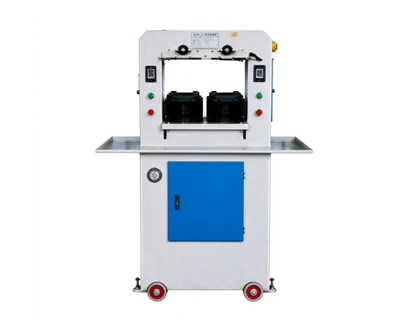
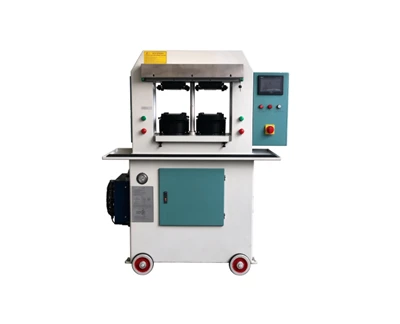
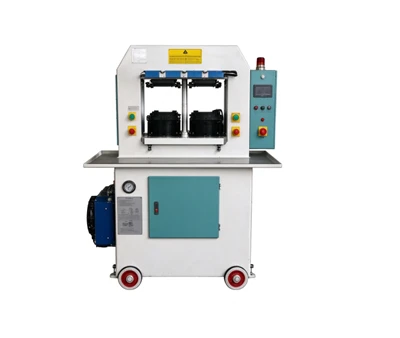
Gasbag type bottom press machines, also commonly called airbag sole press machines, use flexible airbags to perform 360-degree all-around wrapping compression. This is the key feature separating them from rigid metal pressing blocks. Instead of hard moulds squeezing the shoe locally, the inflated airbag wraps the whole shoe evenly without dead angles. The uniform wrapping pressure protects fine textures and patterns engraved on the outsole, keeping the sole surface details clear and intact after pressing.
This machine eliminates the requirement for dedicated pressing dies. Operators only need to place pre-assembled shoes into the working chamber to complete the pressing process. Removing die fabrication greatly cuts fixture investment. For footwear enterprises, this can save more than 10,000 RMB every year on mould manufacturing and maintenance costs. The airbag pressing principle is especially ideal for high-difficulty, irregular and complex shoe shapes that rigid metal press heads struggle to fit. The standard single-head gasbag bottom press reaches an output of more than 1000 pairs per shift. For factories facing larger order volumes, double-head configurations are available to double productivity. Thanks to the zero-dead-angle wrapping effect, this machine achieves one-time in-place pressing with an extremely low rework rate, reducing waste of adhesive, uppers and outsoles caused by repeated pressing operations.
2.4 Rotary Type Sole Attaching Machine
Besides these three mainstream single-station press machines, rotary type sole attaching machines serve high-volume production scenarios. Rotary sole attaching machines adopt multi-station rotating platforms; the common version is a four-station rotary design. Rotating stations reduce idle waiting time between loading and pressing, significantly lifting overall production capacity.
Equipped with PLC controllers and touch-screen human-machine interfaces, rotary presses can store multiple groups of parameter presets for different shoe lasts. Operators can quickly recall saved settings when switching shoe styles. Each station is fitted with multiple independent hydraulic side pressing pads. Every pad can be activated or deactivated separately via stop pins, adapting to varied shoe side contours. An automatic balancing hydraulic system maintains equal pressure on pressing rods, removing the need for manual adjustment when processing long boots or shoes with different heel heights. Rotary sole attaching machines are widely deployed in large-scale sneaker and casual shoe factories with continuous high-volume orders. The 4-station model can produce around 4000 pairs within eight working hours, while 6-station versions can reach up to 5500 pairs per shift.
3. Core Technical Principles of Sole Pressing
Pressure control is the core technical indicator for all sole pressing equipment. Pressure magnitude, pressure distribution uniformity, holding time and pressure release speed all affect bonding results. If pressure is insufficient, the glue cannot fully spread between upper and outsole, leading to weak bonding and easy separation. Excessive pressure may squeeze out too much adhesive, deform the shoe upper or compress the outsole, altering shoe shape and damaging surface details.
Modern sole presses integrate precision pressure gauges, hydraulic regulating valves and programmable control systems. Operators can set and lock pressure value and pressing holding time according to shoe material properties. Soft materials such as lightweight EVA outsoles need lower pressure, while hard rubber outsoles require stronger pressing force.
Material selection also influences sole pressing process planning. Different outsole materials including rubber, EVA, TPU and PU have different hardness and compression characteristics. Rubber outsoles demand longer pressure holding time to ensure adhesive penetration. EVA materials are elastic and prone to deformation, so operators must strictly control pressure magnitude. Shoe adhesive types also interact with pressing parameters. Water-based glue and solvent-based glue have different curing windows. Pressing must be finished within the open time of adhesive to guarantee bonding performance.

4. Operation & Maintenance Requirements for Sole Press Equipment
Operator training and daily machine maintenance cannot be overlooked in sole pressing workshops. Even premium shoe machinery will suffer performance degradation without regular maintenance.
Hydraulic sole presses require periodic hydraulic oil replacement, seal inspection and leak checking. For airbag type machines, operators need to examine airbags regularly for scratches and air leakage. Rotary multi-station equipment needs lubrication for rotating bearings and sliding guide rails. Fault alarm functions built into modern machines help technicians locate breakdowns rapidly and minimize production downtime.
Well-trained operators understand how to adjust parameters according to shoe style changes, inspect semi-finished shoes after pressing and identify defective products at early stages. Standardized operating procedures effectively reduce human error.
5. Key Factors for Shoe Factories to Select Sole Press Machinery
When shoe factory owners select sole pressing machinery, they need to evaluate multiple factors comprehensively.
Main shoe structure: Factories mainly manufacturing wall sneakers prefer wall type sole presses. Factories handling mixed styles, women's shoes and small varied orders often select universal hydraulic presses. Enterprises focusing on complex, irregular shoe designs and hoping to cut mould expenses tend to choose gasbag type bottom presses. If the factory receives large continuous bulk orders, rotary multi-station sole attaching machines are worth considering.
Daily production capacity: Small workshops with low daily output can adopt single-head compact machines. Large manufacturers with thousands of pairs of daily output need multi-station rotary or double-head equipment.
Workshop & supporting conditions: Workshop space, power supply condition and maintenance capacity also affect purchasing decisions. Some factories also consider future product upgrading; they prefer machines with flexible parameter adjustment to accommodate new shoe styles later.
6. Future Development Trend of Sole Press Technology
Global footwear market trends continuously push innovation in sole pressing technology. As consumers pursue diversified shoe appearance, lightweight materials and higher product quality requirements, shoe machinery manufacturers keep upgrading sole press equipment.
Intelligent control systems are gradually replacing simple manual valves. PLC and touch screen control make parameter storage, data recording and production counting available. Some advanced models add pressure curve recording functions to track every pressing cycle's pressure change, supporting production quality traceability. Energy-saving hydraulic systems reduce power consumption and oil waste, meeting the rising demand for green manufacturing in the footwear industry.

7. Summary
In summary, sole pressing is far more than a simple squeezing action in shoe production. It is a systematic process combining mechanical equipment, adhesive technology, material characteristics and standardized operation. Proper selection, correct parameter setting and regular equipment maintenance help shoe factories stabilize product quality, cut rework rate, lower production cost and improve competitiveness in the global footwear market. Choosing the right sole press machine matching product positioning is one of the most critical investments for footwear manufacturers.