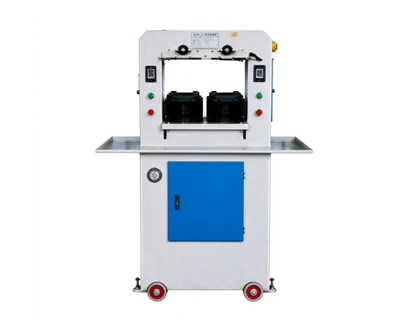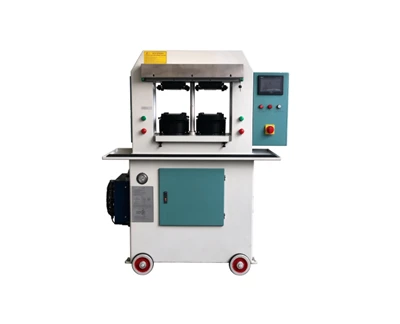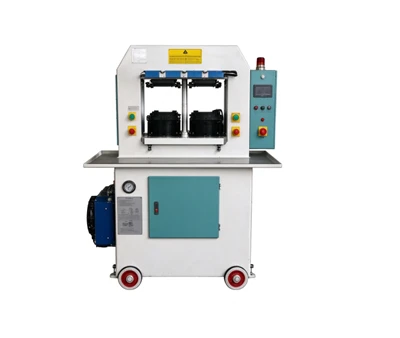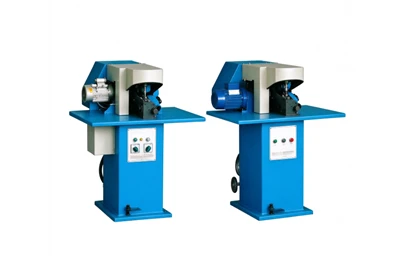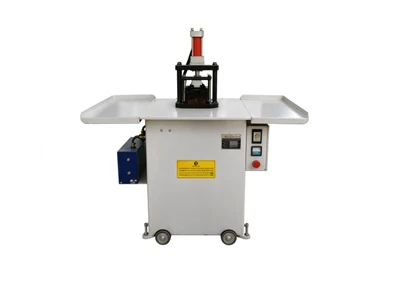
Steel toe pasting and pressing machines address a specific bottleneck in safety footwear production: the steel toe cap must be positioned, glued, and pressed before the lasting process, and any delay or inconsistency at this stage propagates through every downstream operation. The efficiency gains from these machines come from compressing a multi-step manual operation into a single automated cycle, and from reducing the rework that occurs when the toe cap is not correctly seated.
The Efficiency Bottleneck in Manual Steel Toe Processing
Traditional safety shoe production requires the steel toe cap to be assembled piece-by-piece on the last. The upper must be partially lasted, then peeled back, the steel box toe inserted between the upper and lining, adhesive applied, and the assembly pressed before final lasting can proceed. This sequence involves multiple manipulative steps and requires skilled operators to position the toe cap correctly without shifting the lining or upper.
The manual method is time-consuming and introduces variability. If the toe cap is not seated precisely, the resulting shoe may fail impact resistance tests or require rework. The adhesive application-typically brushed by hand-is inconsistent, leading to either excess glue (waste) or insufficient coverage (weak bond). Each of these issues slows production and increases cost.
How Integrated Gluing and Pressing Compresses Cycle Time
The steel toe pasting and pressing machine eliminates the separation between gluing and pressing. The machine is designed for application and pressing of steel toe caps into work boots and safety footwear, used prior to the lasting of the shoe upper. The integrated adhesive spraying system reduces the time and manual effort required for brush-applying glue, enabling a faster, more uniform, and more adhesive-efficient application process.
The compression cycle itself is rapid. During the pressing process, pressure is applied evenly, ensuring the steel toe cap is seated instantly and precisely. The processing time per shoe is a mere 3 to 5 seconds. This is dramatically faster than manual positioning and pressing, which depends on operator dexterity and judgment.
The control system allows for adjustment of both the pressing duration and the adhesive volume to suit different shoe models. This adaptability means the machine does not become a bottleneck when switching between styles-changeover is a matter of parameter adjustment, not mechanical reconfiguration.
Throughput and Labor Reduction
The practical efficiency impact is measurable in production numbers. Standard single-head steel toe pressing machines process approximately 1,200 to 1,500 pairs per 8-hour shift. Double-head configurations increase this to 1,800 pairs per shift.
But the more significant gain is in labor utilization. Manual steel toe assembly requires the operator to focus on the positioning and pressing task continuously, with the output limited by human speed and attention span. The automated machine separates the loading task from the processing task-the operator positions the shoe, initiates the cycle, and the machine completes the pressing automatically. This enables the operator to work on other tasks or to manage multiple machines, similar to the task-separation model used in other automated sewing equipment.
The machine also reduces manual labor intensity. The even pressure application eliminates the physical strain of manual pressing, and the automated adhesive dispensing removes the need for repetitive brush application.
Consistency Reduces Rework
Perhaps the most underappreciated efficiency driver is consistency. Manual steel toe insertion and pressing produces variable results-a toe cap that is perfectly seated on one shoe may be slightly off on the next. These variations are not always caught immediately; they may only become apparent during final inspection or, worse, when the shoe is subjected to impact testing.
The pressing machine applies uniform pressure, ensuring the steel toe cap is seated instantly and precisely every time. The adhesive spray system uses a precision metering system with a specialized atomizing nozzle, ensuring a uniform adhesive layer free from overflow or missed spots. This uniformity means the bond between steel toe and upper is consistent across every pair.
The result is fewer defective units, less rework, and fewer shoes scrapped after inspection. For a factory producing thousands of safety shoes per shift, even a small reduction in defect rate translates into significant recovered capacity.
Summary
| Efficiency Factor | Manual Method | Steel Toe Pasting & Pressing Machine |
|---|---|---|
| Cycle time per shoe | Depends on operator | 3–5 seconds |
| Throughput | Variable | 1,200–1,800 pairs/8hrs |
| Adhesive application | Manual brushing | Automated spray, uniform coverage |
| Toe cap positioning | Manual, variable | Uniform pressure, precise seating |
| Rework rate | Higher due to inconsistency | Lower-consistent bond every cycle |
The machine does not simply perform the same operation faster. It changes the nature of the operation-from a skill-dependent manual task to a controlled, repeatable automated process. This is where the efficiency gain originates.