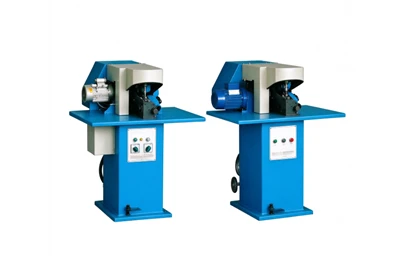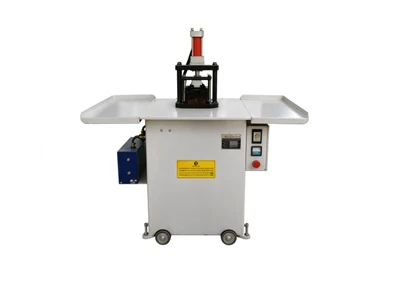
4-Cold 4-Hot Heel Forming Machine for Higher Output
Heel forming machines are available in several station configurations, ranging from single-station units that combine hot and cold forming in one position to multi-station machines designed for high-volume production. The 4-cold 4-hot configuration represents the high-output end of this range. It uses four hot stations and four cold stations to process multiple uppers in parallel, delivering throughput that single-station or dual-station machines cannot match.
This article examines what the 4-cold 4-hot configuration is, how it works, why it delivers higher output, and what to consider when evaluating this type of machine for your factory.
What Is a 4-Cold 4-Hot Heel Forming Machine
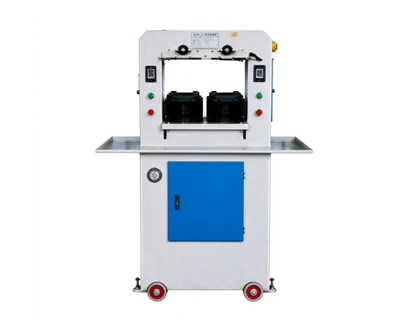
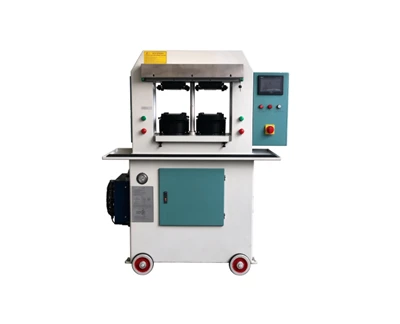
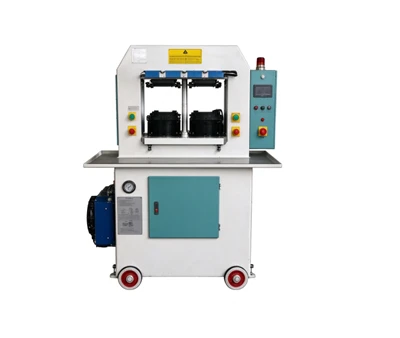
A 4-cold 4-hot heel forming machine is a heel forming machine equipped with eight forming stations in total: four hot stations for heat forming and four cold stations for cold setting. The stations are arranged so that multiple uppers can be processed simultaneously, with each upper passing through a hot station and then a cold station.
The configuration is designed for factories that produce footwear at high volume and need the heel forming operation to keep pace with the rest of the production line. By processing multiple uppers in parallel, the machine multiplies the effective output compared to machines with fewer stations.
The term "4-cold 4-hot" describes the station count, not the machine's physical size alone. A machine with this configuration may be larger than a single-station unit, but the additional stations are arranged to maximize throughput without requiring proportional increases in floor space. The design philosophy is to concentrate production capacity into a single machine that can serve the needs of a high-volume line.

How the 4-Cold 4-Hot Configuration Works
The working principle of each station is the same as any heel forming machine: the hot station applies heat and pressure to shape the heel seat, and the cold station applies pressure without heat to set the shape. The difference is that with four hot and four cold stations, the machine can process four uppers at a time through the hot stage and four uppers at a time through the cold stage.
The sequence typically follows this pattern:
Loading. Four uppers are loaded into the four hot stations, either by one operator or by multiple operators working in parallel. On machines with air bag wrapping, the last of each upper is wrapped in an air bag so that the shoe bag is tighter and more uniformly against the shoe last.
Hot forming. All four hot stations apply heat and pressure simultaneously, shaping the heel seats of the four uppers. Temperature and pressure are adjustable to suit the material being processed. The hot forming stage may use contact heating, infrared heating, or steam-assisted heating, depending on the machine design.
Transfer. The four uppers are transferred from the hot stations to the four cold stations. On some machines, the transfer is manual; on others, it is automated. The transfer time is part of the overall cycle and should be minimized to maintain throughput.
Cold setting. All four cold stations apply pressure without heat, setting the shape while the material cools. The cooling system may use an environment-friendly freezing system, a non-frozen liquid circulation cooling system, or convection air recycling, depending on the machine configuration.
Unloading. The four formed uppers are removed from the cold stations, and the cycle repeats. With two operators working in parallel, the loading and unloading can be completed quickly, keeping the machine at its designed cycle rate.
Because the hot and cold stages operate in parallel, the machine's effective cycle time is determined by the longest single-stage time, not by the sum of the hot and cold times. This is what delivers the higher output.
Why More Stations Mean Higher Output
The relationship between station count and output is straightforward. A single-station machine processes one upper at a time through both hot and cold stages. A dual-station machine processes one upper at a time but can overlap the hot and cold stages, so the hot station can be loaded while the cold station is setting a previous upper.
A 4-cold 4-hot machine takes this parallelism further. Four uppers move through the hot stage together, and four uppers move through the cold stage together. The machine's output per cycle is four times that of a single-station machine, and the overlapping of hot and cold stages means the cycle time is shorter than the sum of the individual stage times.
For a factory producing thousands of pairs per shift, this parallelism is the difference between a heel forming operation that keeps pace with the line and one that becomes a bottleneck. Consider the arithmetic: if a single-station machine processes one upper every 30 seconds, a 4-cold 4-hot machine with a similar per-upper cycle time processes four uppers every 30 seconds. The effective output per hour is four times higher, assuming the loading and unloading can keep pace.
In practice, the output gain depends on how well the loading and unloading operations are organized. A single operator loading and unloading eight stations would struggle to keep up with the machine's cycle. Two operators working in parallel can load and unload the stations more efficiently, which is why many 4-cold 4-hot machines are designed for dual-operator use.
Key Features That Support Higher Output
A 4-cold 4-hot heel forming machine typically includes several features that support its high-output design.
Independent hot and cold head control. Each head can be controlled separately, allowing the operator to set the temperature and pressure for the material being processed. This is important for factories that produce multiple shoe types on the same machine. For example, a thick leather upper may require a higher hot-forming temperature and a longer cold-setting time than a thin synthetic upper. Independent control allows the operator to optimize each station for the material at hand.
Air bag wrapping. The air bag wrapping method wraps the last in an air bag so that the shoe bag is tighter and more uniformly against the shoe last. The uniform pressure eliminates high spots and reduces the risk of wrinkles, which is particularly important when processing multiple uppers in parallel. If one station produces a wrinkled heel seat, the entire batch may be affected. Air bag wrapping reduces this risk by distributing pressure evenly across the heel seat surface.
Dual-operator capability. Many 4-cold 4-hot machines allow two people to operate at the same time, which increases working efficiency. With four stations to load and unload, having two operators working in parallel keeps the machine running at its designed cycle rate. One operator can load the hot stations while the other unloads the cold stations, creating a continuous flow that minimizes idle time.
Smart computer screen control. The control system manages temperature, pressure, and forming time for all stations. A smart computer screen makes it easy to set and monitor the parameters, and the machine automatically sleeps under standby mode to conserve energy. The computer screen also allows the operator to save and recall settings for different shoe styles, reducing changeover time.
Adjustable temperature, pressure, and setting time. These parameters can be adjusted to suit different upper materials and different temperature settings needed. This flexibility allows the machine to process a range of shoe types without mechanical changeover. For factories that produce multiple styles on the same line, this adjustability is essential for maintaining throughput across different production runs.
Stable running and high performance. The machine is designed for stable running, high efficiency, and high performance. This means the machine can operate continuously through production shifts without frequent stoppages or adjustments. Stable operation is particularly important for high-output machines, where a single stoppage can delay the entire production line.
Production Capacity
The output of a 4-cold 4-hot heel forming machine depends on the cycle time, which in turn depends on the material and the required forming and setting times. For typical footwear production, a machine of this configuration can process approximately 2,500 to 3,000 pairs per 8-hour shift, depending on the shoe type and operating conditions.
This capacity is significantly higher than single-station machines rated at 1,500 to 2,000 pairs per 8 hours, and higher than dual-station machines at similar ratings. The gain comes from the parallel processing of four uppers through each stage.
For a factory producing 10,000 pairs per day over two shifts, a 4-cold 4-hot machine at 2,500–3,000 pairs per shift can handle the heel forming operation with a single machine, depending on the actual cycle time and the efficiency of loading and unloading.
Energy Efficiency Considerations
A machine with eight stations consumes more power than a machine with fewer stations, but the energy cost per pair may be lower because the machine processes more pairs in the same time. Several features help reduce energy consumption:
Auto-sleep under standby mode. The machine automatically sleeps when not in active production, reducing electricity consumption during idle periods. This is particularly valuable in factories that run multiple shifts with breaks between them, or in factories where production is interrupted by material changes or other operations.
Independent head control. The hot and cold heads can be controlled separately, allowing the operator to set only the temperature and pressure needed for the material being processed. This avoids the energy waste of running both heads at maximum settings regardless of the material.
Efficient cooling system. The machine may use an environment-friendly freezing system, non-frozen liquid circulation cooling, or convection air recycling, depending on the configuration. Each method has different energy characteristics, and the right choice depends on the factory's production profile. A freezing system delivers the fastest cooling but consumes more energy. A convection air system is more energy-efficient but may require longer cooling times. The non-frozen liquid circulation system offers a middle ground, providing stable cooling without the complications of a freezing system.
Over a year of production, these energy-saving features can reduce the machine's operating cost by a measurable margin, improving the return on the equipment investment.
Applications
A 4-cold 4-hot heel forming machine is suitable for factories producing footwear at high volume, particularly:
Men's shoe production lines where heel seat forming must keep pace with lasting and assembly. Men's shoes often use thicker leather uppers that require higher forming temperatures and longer setting times. The 4-cold 4-hot configuration allows multiple uppers to be processed in parallel, keeping the line supplied with formed uppers.
Women's shoe production lines producing pumps, flats, and boots in large batches. Women's shoes often have visible heel counters where appearance matters. The air bag wrapping method and uniform pressure distribution deliver the smooth, wrinkle-free heel seats that these styles require.
Boot manufacturing where the heel seat must be formed for ankle boots, riding boots, and tall boots. Boot uppers are larger and often thicker than shoe uppers, requiring more forming time per pair. The 4-cold 4-hot configuration compensates for the longer forming time by processing multiple uppers in parallel.
Safety shoe production where consistent heel seat forming supports the overall protective performance of the footwear. In safety shoes, the heel seat must align correctly with the toe cap and sole to ensure the shoe provides the required protection. The consistent forming delivered by the 4-cold 4-hot machine helps maintain this alignment across the production batch.
The machine is also suitable for factories that produce multiple shoe types on the same line, because the adjustable parameters allow changeover between styles without mechanical modification.
What to Consider When Evaluating a 4-Cold 4-Hot Machine
When considering a 4-cold 4-hot heel forming machine for your factory, several factors should be evaluated.
Floor space. A machine with eight stations requires more floor space than a single-station machine. Verify that the machine dimensions fit your available production area. Typical dimensions for this class of machine are approximately 2,200 × 1,030 × 2,000mm, though dimensions vary by model.
Power and air requirements. A machine with this configuration typically requires 380V/50HZ power, 5.50kW to higher max power consumption, and 0.5–0.6 MPa air pressure input. Verify that your factory's utilities can meet these requirements without upgrades.
Operator availability. A 4-cold 4-hot machine benefits from dual-operator use. Confirm that you have two operators available for the machine, or that the machine can be operated effectively by a single operator at a reduced cycle rate.
Material compatibility. Verify that the machine can handle the shoe types and upper materials your factory produces. Consider the range of shoe sizes, upper materials, and counter types.
Maintenance access. With eight stations, maintenance access becomes more complex. Verify that the machine's design allows access to all stations for cleaning, inspection, and replacement of wear parts.
Summary
| Feature | Benefit |
|---|---|
| Four hot + four cold stations | Processes four uppers per cycle; higher output than single or dual-station machines |
| Parallel hot and cold stages | Cycle time determined by longest stage, not sum of stages |
| Independent head control | Adjustable parameters for different materials and shoe types |
| Air bag wrapping | Uniform pressure; reduces wrinkles when processing multiple uppers |
| Dual-operator capability | Two operators keep the machine running at its designed rate |
| Smart computer control | Easy parameter setting and monitoring; auto-sleep energy saving |
| Stable running and high performance | Continuous operation through production shifts |
| 2,500–3,000 pairs/8hrs | Keeps pace with high-volume production lines |
A 4-cold 4-hot heel forming machine delivers higher output by processing multiple uppers in parallel through dedicated hot and cold stations. For shoe factories producing footwear at volume, this configuration provides the throughput needed to keep the heel forming operation from becoming a bottleneck, while maintaining the consistent heel seat quality that the rest of the production line depends on. The key is to match the machine's capacity to your actual production volume, ensure that loading and unloading are organized efficiently, and verify that the machine's adjustability, cooling system, and energy features align with your production profile.