Production Capacity of Automatic Toe Flattening Machine
In the highly competitive global footwear manufacturing industry, production capacity is the metric that separates profitable factories from those that constantly struggle with bottlenecks and missed deadlines. When evaluating machinery for the bottoming room, factory owners and production managers often focus heavily on purchase price and basic functionality. However, the true value of an Automatic Toe Flattening Machine lies not just in how well it flattens a shoe toe, but in how much volume it can process reliably over an 8, 12, or 24-hour shift.
Production capacity is not a single static number printed on a specification sheet. It is a dynamic outcome influenced by machine design, material characteristics, operator efficiency, and how well the machine integrates into the broader assembly line.
This comprehensive guide explores the production capacity of the Automatic Toe Flattening Machine. We will break down what determines capacity, how to measure it accurately, strategies to maximize it, and why understanding capacity is critical for your return on investment (ROI).

Defining Production Capacity for Toe Flattening
Before diving into optimization, we must clarify what "production capacity" means for a toe flattening machine. Broadly, it is the maximum number of shoes (usually measured in pairs) that the machine can process within a specific timeframe, usually per hour or per 8-hour shift.
However, capacity can be viewed through two lenses:
- Theoretical Capacity: The maximum output if the machine runs without any interruptions, material shortages, or operator delays. Manufacturers often list this number on their spec sheets.
- Effective Capacity (Actual Output): The realistic output achieved during a normal production run, accounting for setup times, minor jams, material loading times, and standard operator fatigue.
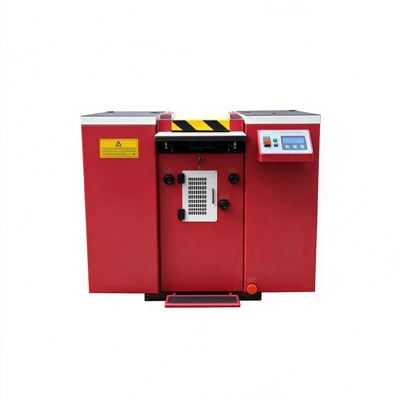
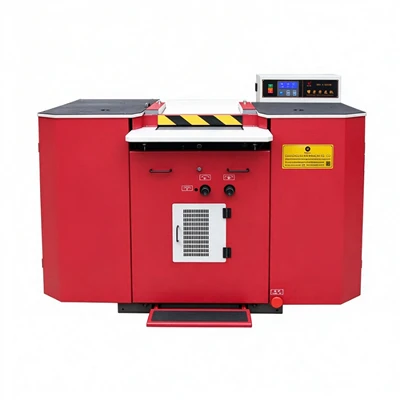
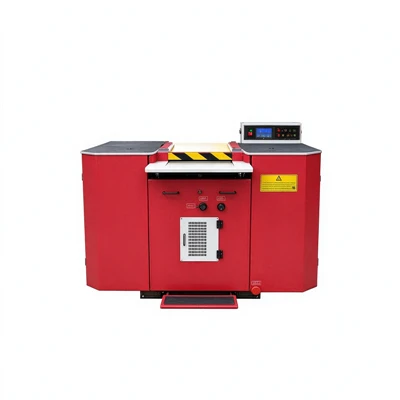
For example, an industrial-grade machine like the GW-550 series boasts a theoretical capacity of 2,000 pairs per 8-hour shift. This translates to roughly 250 pairs per hour. Achieving this effective capacity requires a well-optimized workflow. If the machine is isolated or lacks proper material flow, the actual output might be much lower.
Core Factors Influencing Production Capacity
The production capacity of an automatic toe flattening machine is determined by a combination of mechanical variables and operational conditions.
1. Machine Design and Mechanism
The internal design of the machine dictates its baseline speed. The GW-550 utilizes a dual-action mechanism: a heated top plate and an oscillating roller. The efficiency of this mechanism depends on:
- Heating Efficiency: How quickly the top plate recovers its temperature after pressing a cold shoe. If the heating element is underpowered, the machine will slow down to maintain the required temperature for adhesive activation.
- Oscillation Speed and Amplitude: The forward speed of the oscillating roller can be adjusted. A higher speed increases output but might compromise the quality of the edge line if set too aggressively.
- Automation Level: Fully automatic machines with indexing tables or automated loading mechanisms will inherently have a higher theoretical capacity than basic manual models.
2. Material Properties
Shoe materials are highly variable. A delicate knitted mesh upper will require a different flattening cycle than a heavy, stiff leather work boot.
- Material Thickness: Thicker materials require longer heating and pressing cycles to ensure the sole bonds properly and the toe flattens completely.
- Heat Sensitivity: Materials like EVA or certain synthetic uppers can deform or burn if heated too quickly. The machine must be calibrated to a slower, more controlled cycle to prevent defects.
- Adhesive Requirements: If the adhesive requires a longer heat activation time, the machine's capacity per hour drops.
3. Operator Skill and Ergonomics
Even the most automatic machines require some human intervention. The operator must load the shoe onto the last, initiate the cycle, and remove it.
- Learning Curve: An experienced operator can load and unload seamlessly, matching the machine's cycle time perfectly. A new worker will take longer, reducing daily capacity.
- Machine Ergonomics: If the machine is designed with the operator in mind-for instance, positioning the loading area at waist height to minimize bending-the operator will experience less fatigue, maintaining higher speeds throughout the shift.
- Safety Features: Features like dual-hand start buttons or safety sensors can add seconds to each cycle. However, these are essential for safety and actually improve long-term capacity by preventing accidents and subsequent downtime.
4. Integration into the Assembly Line
A fast machine is useless if it is starved of materials. The toe flattening process occurs after the sole has been attached.
- Upstream Bottlenecks: If the sole attaching machine only outputs 150 pairs per hour, the toe flattening machine will never reach its 250 pairs per hour theoretical limit. The capacity must be balanced across the line.
- Downstream Flow: If the finished shoes pile up because the next station is slow, the operator might have to stop the flattening machine to clear the area.
- Material Handling: The distance the operator has to walk to get un-flattened shoes and stack flattened ones significantly impacts effective capacity.
Optimizing and Maximizing Production Capacity
Knowing the factors is step one; optimizing them is where profit is made. Here are key strategies to maximize the effective capacity of your automatic toe flattening machine.
1. Precision Calibration and Maintenance
Machine downtime is the enemy of capacity.
- Preventative Maintenance: Regularly checking the heating elements, lubricating the oscillating roller bearings, and ensuring the hydraulic/pneumatic systems (if applicable) are in top shape prevents sudden breakdowns.
- Temperature Calibration: Ensure the heated top plate is holding the exact required temperature. Fluctuations lead to rework, which destroys capacity.
- Custom Mold Optimization: Because toe flattening requires the shoe to be pressed against a specific shape, ensuring your custom molds are in good condition and properly aligned speeds up the process.
2. Smart Parameter Adjustment
The machine's adjustability is a major advantage.
- Balance Speed and Quality: Factory managers must find the "sweet spot" where the oscillation speed and pressure are high enough for maximum output, but not so high that they cause knock marks or damage the material (which leads to scrap).
- Batch Processing: When running a batch of shoes with the same material, take the time to dial in the perfect settings once. This avoids constant tweaking and allows the operator to run at maximum speed for the entire batch.
3. Line Balancing
Capacity optimization is a holistic process.
- Buffer Stocks: Place small buffer stocks of shoes between the sole attaching station and the toe flattening station. This ensures the flattening machine always has work to do, even if the upstream machine has a brief pause.
- Layout Optimization: Position the toe flattening machine in a U-shaped cell or directly adjacent to the sole pressing station. Minimizing the distance material travels prevents wasted operator motion.
4. Operator Training and Ergonomics
Invest in your operators.
- Cross-Training: Train multiple workers on the toe flattening machine. This ensures that if one is absent or on break, another can step in without losing capacity.
- Ergonomic Improvements: Provide comfortable anti-fatigue mats and ensure the lighting is bright. A comfortable operator is a fast operator.
The Economic Impact of High Production Capacity
Why does this focus on capacity matter? Because production capacity directly translates into financial performance.
1. Lower Cost Per Pair
The cost of the machine, the factory rent, the electricity, and the base salary of the operator are fixed costs. The more pairs you can push through the machine, the lower the fixed cost per pair becomes. A machine running at 2,000 pairs/shift is significantly more profitable per unit than one running at 1,200 pairs/shift, even if they consume the same amount of power.
2. Faster Order Fulfillment
In B2B footwear manufacturing, time-to-market is critical. Brands want their orders shipped quickly. High production capacity allows your factory to accept larger orders and complete them faster, leading to higher customer satisfaction and more repeat business.
3. Flexibility for Small Batches
Ironically, high-capacity machines also enable small-batch production. If a machine is highly efficient and can process a small batch of 500 shoes very quickly, the factory can afford to take on smaller, higher-margin boutique orders without disrupting the main production schedule.
Comparing Capacity: Automatic vs. Manual
To fully appreciate the production capacity of a modern automatic toe flattening machine, compare it to manual methods.
In a fully manual workflow, a worker uses a hand hammer to tap and flatten the toe area. Not only is this physically exhausting, leading to severe drops in speed as the shift progresses, but the quality is inconsistent. The manual worker might process 50 to 100 pairs per shift, depending on the shoe complexity.
By switching to an automatic machine like the GW-550, you are taking that 50-100 pair capacity and multiplying it to 2,000 pairs per shift. This is a quantum leap in productivity. It eliminates the bottleneck in the bottoming room, allowing the factory to scale up production dramatically.
Addressing Common Capacity Misconceptions
When looking at the capacity figures of an automatic toe flattening machine, buyers sometimes have misconceptions.
Misconception 1: "If the machine says 2000 pairs, I will get 2000 pairs."
Reality: As discussed, effective capacity is lower than theoretical. Factors like breaks, material shortages, and machine setup time will reduce the actual number. You should aim for 80-85% of the theoretical capacity in a well-run factory.
Misconception 2: "Higher capacity means lower quality."
Reality: This is false for modern automatic machines. In fact, the automation ensures consistent pressure, heat, and timing. The speed of the machine is just the speed at which the mechanism cycles. Because it is driven by precise motors and controllers, the quality is consistent regardless of the speed, provided the material-specific parameters are set correctly.
Conclusion
The production capacity of an Automatic Toe Flattening Machine is a critical metric that directly influences the profitability and scalability of a footwear manufacturing business. It is not just a number on a brochure; it is a complex outcome of machine design, material compatibility, line integration, and operator skill.
When evaluating your next equipment purchase, look beyond the price tag. Consider how the machine's capacity-such as the 2,000 pairs per 8-hour shift capability of the GW-550-can transform your factory's output. By optimizing your production line, maintaining the machine diligently, and training your operators, you can unlock the full potential of this equipment, transforming your bottoming room into a highly efficient, profit-generating powerhouse. Investing in a high-capacity automatic toe flattening machine is a commitment to quality, speed, and the long-term success of your footwear enterprise.
Ready to Boost Your Factory's Capacity?
Explore our high-efficiency Automatic Toe Flattening Machine (GW-550) and get a customized quotation for your production line today.
Request a Quote