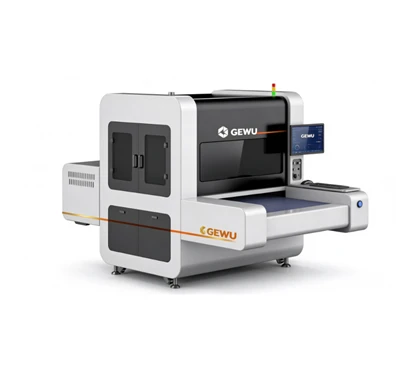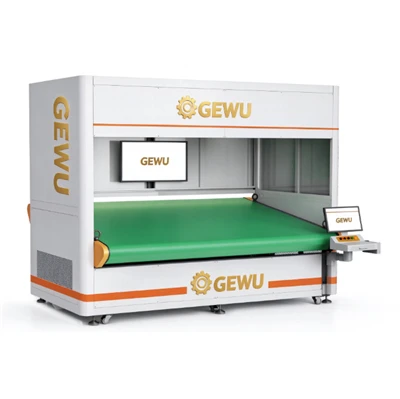
How Shoe Sole UV Curing Machine Improves the Bonding Strength of EVA Soles
The Adhesion Challenge with EVA Foam
EVA (ethylene vinyl acetate) copolymer is the dominant material for athletic shoe midsoles due to its light weight, flexibility, and cushioning properties. However, EVA presents a significant bonding problem: its surface energy is below 30 mJ/m², which is too low for polyurethane or polychloroprene adhesives to properly wet and adhere . The material is chemically inert, and the molding process leaves release agents on the surface that further reduce adhesion.
Traditional solutions have relied on mechanical roughening or halogenation with toxic chlorine-based solutions. Both approaches have serious drawbacks-mechanical methods damage the foam structure and generate dust, while halogenation requires 6+ hours of treatment, produces hazardous chlorine vapor, and leaves chemical residues that can degrade adhesion if over-concentrated .
UV curing machines offer a fundamentally different approach. Instead of mechanically abrading the surface or applying aggressive chemicals, UV treatment uses photochemical reactions to modify the EVA surface at the molecular level.
The Photochemical Mechanism: How UV Creates Adhesion Sites
The UV curing process works in two interconnected stages: primer activation and surface modification.
Primer Activation and Cross-Linking
Before UV treatment, a UV primer-typically containing photoinitiators, acrylate monomers, and chlorinated polyolefin resins-is applied to the EVA sole surface . The primer penetrates the porous EVA structure during a brief soak or brush application.
When the primed sole passes under the UV lamp, the photoinitiators absorb the ultraviolet energy and decompose into free radicals. These radicals initiate polymerization and cross-linking reactions among the acrylate monomers and other reactive components in the primer . The result is a dense, polar film chemically bonded to the EVA surface.
As patent literature describes, the primer creates a "bridging" effect: the chlorinated polyolefin components are compatible with the non-polar EVA substrate, while the acrylate groups provide polar sites that the polyurethane adhesive can bond to . This molecular bridge transforms the EVA surface from adhesive-resistant to adhesive-receptive.
Direct Surface Modification
UV radiation also modifies the EVA surface directly, independent of the primer chemistry. The high-energy photons-particularly at wavelengths of 185 nm and 254 nm-are sufficient to rupture carbon-carbon and carbon-hydrogen bonds on the polymer surface .
This bond scission triggers two simultaneous processes. First, oxygen from the air (or generated ozone in the UV chamber) reacts with the broken polymer chains to form new polar functional groups: hydroxyl (–OH), carbonyl (C=O), and carboxyl (–COOH) moieties . These groups raise the surface energy of the EVA, allowing the adhesive to wet and spread across the surface.
Second, the UV treatment creates surface roughness through ablation and etching. Research using scanning electron microscopy shows that UV-ozone treatment produces a "ruffled" topography with deep crevices on the EVA-PE surface . This mechanical interlocking complements the chemical bonding, providing additional adhesion strength.
The Complete Process in a UV Curing Machine
In an industrial setting, the UV curing machine integrates these mechanisms into a continuous production flow. A typical sequence includes:
Step 1: Primer Application. EVA soles are immersed in or brushed with UV primer. For EVA material specifically, soaking times of 2–5 minutes allow the primer to penetrate the porous surface .
Step 2: Pre-Drying. The primed soles pass through a heated zone (60–70°C) to evaporate solvent carriers, leaving the reactive components on the surface .
Step 3: UV Irradiation. The soles travel under UV lamps on a conveyor. Patent specifications for EVA treatment describe UV irradiation at conveyor speeds of 6–10 m/min and energy levels of 2.0–5.0 J/cm . The UV wavelength and intensity determine the depth and degree of surface modification.
Step 4: Cooling and Stabilization. After UV treatment, the soles cool before adhesive application. The modified surface remains active for a limited time-typically the adhesive should be applied within a few hours .
Quantified Adhesion Improvement
Laboratory testing confirms the effectiveness of UV treatment for EVA adhesion. A study using T-peel tests on UV-treated EVA12 bonded with polychloroprene adhesive found that treatment longer than 5 minutes significantly improved adhesion strength . The failure mode shifted from adhesive failure at the EVA-adhesive interface to cohesive failure within the EVA material itself-meaning the bond became stronger than the foam it was joining .
For EVA-PE blends used in Phylon soles, UV-ozone treatment produced similar results. Peel tests of treated EVA-PE/polyurethane adhesive/leather joints showed "noticeably increased" adhesive strength, with cohesive failure occurring in the leather substrate rather than at the adhesive interface . This indicates that the UV-modified EVA surface bonded more strongly to the adhesive than the leather's own internal strength.
Why This Matters for Production
The UV curing machine's contribution to EVA sole bonding is not marginal-it is transformative. The machine converts a low-energy, chemically inert surface into one that accepts adhesive reliably, reducing delamination defects and returns. It replaces a 6-hour halogenation process with a treatment that takes minutes, enabling continuous production flow . And it eliminates the organic solvents and chlorine vapors that pose health risks to workers and environmental compliance burdens for manufacturers.
For footwear manufacturers producing EVA-soled athletic shoes, the UV curing machine is the enabling technology that makes reliable bonding possible at production speed.